Thursday, September 9, 2010

Myths and Legends: Thetis Consoling Achilles

Thetis Consoling Achilles. To find out more about Thetis, see this Wikipedia article: link; for information about the image: image source.

The sea nymph Thetis was the mother of the Greek hero Achilles; his father was King Peleus of the Myrmidons. I like the way that Achilles is poised in a space in-between the sea where his mother dwells and the human space that we inhabit!

You can also find more myths and legends for the week of September 9 - September 15 here. For more information and links to the actual javascript code, see the Myths & Legends Widget Reference Page.

Round-Up: September 9

Here is a round-up of today's blog posts - and for previous posts, check out the Bestiaria Latina Blog archives. You can keep up with the latest posts by using the RSS feed, or you might prefer to subscribe by email. I'm Twittering again now at Aesopus and AesopusEnglish.

HODIE: ante diem quintum Idus Septembres (and yes, you can have your own Roman Google Calendar).

VERBUM HODIERNUM: Today's word is LICET - read a brief essay about the word at the Verbosum blog. Here's one of the sayings you can find in the essay: Quidquid non licet, magis desideratur, "Whatever is not allowed is desired all the more."

MILLE FABULAE: New materials at the blog include lots more illustrated fables. This is also where you can download your free PDF copy of the Mille Fabulae et Una book.

FABULAE FACILES: The new easy-to-read fable is Mus et Rana, Decertantes, the story of the battle between the frog and the mouse.

ENGLISH AESOP: Today's English fables are from Sir Roer L'Estrange: A Miser Burying His Gold, A Fox and a Lion, A Cat and a Cock, Two Frogs that Wanted Water, and A Stag with One Eye.

TODAY'S MOTTOES & PROVERBS: Widgets available at SchoolhouseWidgets.com.

3-Word Mottoes: Today's 3-word motto is Sidus adsit amicum (English: May my lucky star attend me).

3-Word Proverbs: Today's 3-word proverb is Cito arescit lacrima (English: A tear dries quickly).

Rhyming Proverbs: Today's proverb with rhyme is: Valde frequens haustus non est, mihi credite, faustus (English: Drinking way too much, believe me, is not good luck - it doesn't quite rhyme in English, but the Latin is charming!).

Vulgate Verse: Today's verse is Responsio mollis frangit iram; sermo durus suscitat furorem (Proverbs 15:1). For a translation, check out the polyglot Bible, in English, Hebrew, Latin and Greek, at the Sacred Texts Archive online.

Elizabethan Proverb Commentary: Here is today's proverb commentary, this time by Conybeare: Vento vivere: To lyve by the winde. A proverbe applied to them which have no substance to live on.

Today's Poem: Today's poem is from Cato's Distichs, with a word list at NoDictionaries.com:
Forti animo ferto, cum sis damnatus inique:
Nemo diu gaudet, qui iudice vincit iniquo.
English: "Bear up with a strong spirit when you have been unjustly condemned: no one long rejoices who has won by means of an unjust verdict."

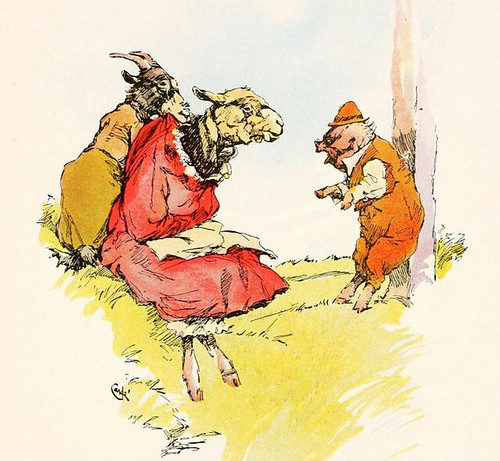
Today's image is an illustration for the story of the pig (source): 336. Porcus ab Ovibus Criminatus. Porcus, criminatus ab ovibus, quod domino, a quo tanta pascebatur diligentia, nullam referret gratiam, cum ipsae lac, lanam, agnosque illi praeberent, “Mortuus,” inquit, “referam; non ab re me nutrit.”

Sus, Ovis et Caper

Wednesday, September 8, 2010

Round-Up: September 8

Here is a round-up of today's blog posts - and for previous posts, check out the Bestiaria Latina Blog archives. You can keep up with the latest posts by using the RSS feed, or you might prefer to subscribe by email. I'm Twittering again now at Aesopus and AesopusEnglish.

HODIE: ante diem sextum Idus Septembres (and yes, you can have your own Roman Google Calendar).

VERBUM HODIERNUM: Today's word is FUGIO - read a brief essay about the word at the Verbosum blog. Here's one of the sayings you can find in the essay: Miles fugiens denuo pugnabit. , which is a Latin version of that nice English saying, "he who fights and runs away lives to fight another day."

MILLE FABULAE: New materials at the blog include lots more illustrated fables and I've also put the Twitter feed there at the blog so you can see the latest tweets - it's at the bottom of the right sidebar. This is also where you can download your free PDF copy of the Mille Fabulae et Una book.

FABULAE FACILES: The new easy-to-read fable is Lupus et Puer Mendax, the famous story of the boy who cried "Wolf!"

PODCASTS: Today's Latin audio fable is Ovis et Canis Calumniosus, a sad story of justice denied.

ENGLISH AESOP: Today's English fables are from Roger L'Estrange's Aesop: Fox that Lost his Tail, A Bragging Traveler, A Father and his Sons, A Frog and an Oxe, and The Hares and the Frogs.

TODAY'S MOTTOES & PROVERBS: Widgets available at SchoolhouseWidgets.com.

Tiny Proverbs: Today's tiny proverb is: Cuique suum (English: To each his own - one of the proverbs which has my total endorsement; I guess you could call it my personal philosophy of life expressed in just two little words!).

3-Word Mottoes Verb-less: Today's 3-word verb-less motto is Sub pondere sursum (English: Bearing my load, rising upward).

Latin Animal Proverb: Today's animal proverb is Mus salit in stratum dum scit abesse cattum (English: The mouse jumps on the bed when it knows the cat is gone - although the Latin is so much better, of course, since it rhymes!).

Proverbs of Polydorus: Today's proverb from Polydorus is: Satius est subire semel quam cavere semper (English: It's better to suffer something once than to always be on guard).

Proper Name Proverb from Erasmus: Today's proper name proverb from Erasmus is yracusana mensa (English: A table fit for Syracusans; from Adagia 2.2.68 - This referred to an opulent and splendid feast, with exquisite food).

Greek Proverb of the Day: Today's proverb is Δὶς πρὸς τὸν αὐτὸν αἰσχρὸν προσκρούειν λίθον (English: It is shameful to stumble twice against the ssame stone - which is to say, erring once is not a problem, but you shouldn't make the same mistake a second time!).

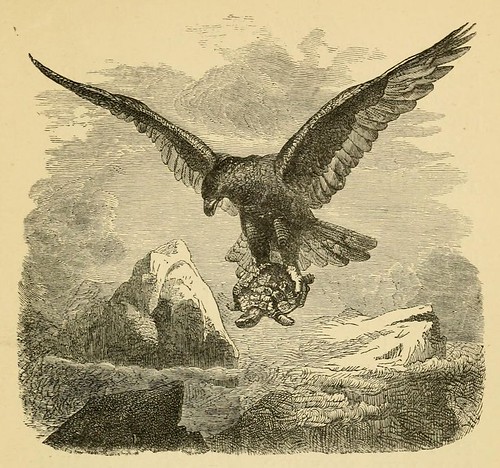
Today's image is the turtle flying! (source): 407. Aquila et Testudo. Testudo aquilam magnopere orabat, ut volare sese doceret. “Rem petis,” inquit aquila, “naturae tuae contrariam, nam quomodo poteris volare, cum alas non habeas?” Testudo autem nihilominus aquilam obsecrabat ut se volucrem facere vellet. Itaque eam ungulis arreptam aquila sustulit in sublime ibique demisit, ut per aera ferretur sed, cum in rupes decidisset, comminuta interiit.

Aquila et Testudo

Tuesday, September 7, 2010

Myths and Legends: Circe and Scylla

Circe and Scylla. To find out more about the rivalry between Circe and Scylla, see this Wikipedia article: link; for information about the image: image source.

This painting shows a famous story from Ovid's Metamorphoses, in which Circe (the famous witch of Homer's Odyssey) is in love with Glaucus, a sea god - and so is Scylla, a water nymph. Circe is a dangerous person to cross! What you see here is Circe, in the foreground, pouring poison into a stream where Scylla liked to bathe; you can see the lovely Scylla in the background. Once Scylla plunged into the water, she was turned into the monstrous Scylla that you know from the twin perils of "Scylla and Charybdis."

You can also find more myths and legends for the week of September 2 - September 8 here. For more information and links to the actual javascript code, see the Myths & Legends Widget Reference Page.

Sunday, September 5, 2010

Myths and Legends: Venus and Anchises

Venus and Anchises. To find out more about Anchises, the father of Aeneas, see this Wikipedia article: link; for information about the image: image source.

This is a depiction by the Renaissance painter Annibale Carracci, showing Venus, the goddess of love, and her lover Anchises. The offspring of this love would be none other than Aeneas, the Trojan hero who, after the fall of Troy, founded what would later become the Roman world in all its glory. As someone who is used to seeing Anchises as an old man carried out from the ruins of Troy on the shoulders of Aeneas, it's fun to see him dallying with the goddess here. Below is a detail from the image showing the inscription on the footstool: genus unde latinum, "whence the Latin race" (would come) - famous words from the opening lines of Vergil's Aeneid.


You can also find more myths and legends for the week of September 2 - September 8 here. For more information and links to the actual javascript code, see the Myths & Legends Widget Reference Page.

Round-Up: September 5

Here is a round-up of today's blog posts - and for previous posts, check out the Bestiaria Latina Blog archives. You can keep up with the latest posts by using the RSS feed, or you might prefer to subscribe by email.

I'm Twittering again now at Aesopus and AesopusEnglish, too! :-)

HODIE: Nonae Septembres - the Nones of September (and yes, you can have your own Roman Google Calendar).

VERBUM HODIERNUM: Today's word is DEUS - read a brief essay about the word at the Verbosum blog. Here's one of the sayings you can find in the essay: Cito fit quod di volunt, "What the gods want happens quickly."

MILLE FABULAE: New materials at the blog include more illustrated fables and a slideshow of images from Alciato's Emblemata. This is also where you can download your free PDF copy of the Mille Fabulae et Una book.

FABULAE FACILES: The new easy-to-read fable is Mures Felem Contemplantes, a great story of how appearances can be deceiving.

PODCASTS: Today's Latin audio fable is Canis et Taurus, a fable about knowing your enemy!

ENGLISH AESOP: Today's English fables are by Sir Roger L'Estrange: A Boy and False Alarms, An Ape and a Fox, A Doctor and Patient, The Frogs Chuse a King, and A Mountain in Labour.

TODAY'S MOTTOES & PROVERBS: Widgets available at SchoolhouseWidgets.com.

Tiny Mottoes: Today's tiny motto is: Amico Hercule (English: With Hercules as my friend).

3-Word Proverbs Verb-less: Today's 3-word verb-less proverb is Medicina calamitatis aequanimitas (English: A cure in a time of calamity is calmness of mind).

Audio Latin Proverb: Today's audio Latin proverb is Liber medicina animi (English: A book is medicine for the soul). To read a brief essay about this proverb and to listen to the audio, visit the Latin Via Proverbs blog.

Maxims of Publilius Syrus: Today's proverb from Publilius Syrus is: Stulti timent fortunam, sapientes ferunt. (English: Fools fear fortune, while wise men bear it - and by fortune there, the sense is really of misfortune or bad luck, since the Goddess Fortuna has her good and bad sides).

Animal Proverb from Erasmus: Today's animal proverb from Erasmus is Furemque fur cognoscit, et lupum lupus (English: Thief knows thief, wolf knows wolf; from Adagia 2.3.63).

Today's image is something exciting: one of the readers of this blog in Germany visited the library at the University of Mannheim, home to Desbillons' personal copy of Sebastian Brant's edition of Steinhowel. This is a photograph he took in the library workshop, where they happened to be doing work on an edition of Aesop! On the left page I recognize the woodcut for the man and the lion debating, and on the right you can see the camel and the flea.