Sunday, April 15, 2012

Round-Up: April 15

Here is a round-up of today's blog posts - and for previous posts, check out the Bestiaria Latina Blog archives. You can keep up with the latest posts by using the RSS feed, or you might prefer to subscribe by email.

HODIE: ante diem septimum decimum Kalendas Maias.

GOOGLE BOOKS: Today's Google Books are Bauhusius' Epigrammata and Du Bellay's Elegiae, Varia epigrammata, Amores, Tumuli .

MYTHS and LEGENDS: The art image for today's legend shows Achilles and Penthesilea; you can also see the legends for the current week listed together here.


TODAY'S DISTICHS and EMBLEMS: All the distichs come with vocabulary lists!

RHYMING DISTICHS: The two new Rhyming Distichs are Si quis convicium, Si quis convicium profert, illud patiatur; / Conviciumque ferat, aliis qui conviciatur; and Quid sis, quid fueris, Quid sis, quid fueris, quid eris, semper mediteris; / Sic minus atque minus peccatis subiicieris..

CATO'S DISTICHS: The two new Cato Distichs are Utere quaesitis opibus, Utere quaesitis opibus, fuge nomen avari: / Quid tibi divitiae, si semper pauper abundes? and Cum tibi vel socium, Cum tibi vel socium vel fidum quaeris amicum, / Non tibi fortuna est hominis sed vita petenda..

MARTIAL'S DISTICHS: The two new Martial Distichs are Lesbia se iurat, Lesbia se iurat gratis numquam esse fututam: / Verum'st; cum futui vult, numerare solet; and Phoenicopteri, Dat mihi pinna rubens nomen, sed lingua gulosis / nostra sapit. Quid si garrula lingua foret?

VERINUS DISTICHS: The two new distichs by Verinus are De Principe, Qui prohibere potest, causam tribuisse videtur / Peccandi, quicquid non vetat illicitum.; and Non Est Credendum Blando Adulatori, Qui te plus solito demulcet carmine blando, / Te capere insidiis nititur ille suis.

OWEN'S DISTICHS: The two new Owen epigrams, with Harvey's English versions, are Oratio, Christus uti clausis penetraverat ostia portis / Sic caeli penetrant invia claustra preces; and De Vitiis et Divitiis, Nemo hominum vivit sine crimine, sive crumena. / Crimine rara suo plena crumena caret.

ROLLENHAGEN'S EMBLEMS: The two new emblems are Non Sine Causa, Non frustra gladium princeps gerit, aut sine causa, / Sed facit officium, praecipiente Deo; and Pando Recondita, Omnia luminibus perlustro, recondita pando;
Me nihil incauto, callide Munde, facis
.

CAMERARIUS'S EMBLEMS: The new emblem is Causa Latet, Sistere currentem remora alta per aequora navim / Fertur; sic vis est maxima in exiguis.

BORNITIUS'S EMBLEMS: The new emblem is Qui Amat Periculum, In Isto Perit, Ignis ait: Noli me tangere; quisquis anhelat / Exitio, praeceps sponte perire solet.


TODAY'S MOTTOES and PROVERBS:

TINY MOTTOES: Today's tiny motto is: Scienter utor (English: I enjoy things wisely).

3-WORD PROVERBS: Today's 3-word verb-less proverb is Cuique suum studium (English: To each his own passion)

AUDIO PROVERBS: Today's audio Latin proverb is Nullum magnum ingenium sine mixtura dementiae (English: There is no great talent without an admixture of madness). To read a brief essay about this proverb and to listen to the audio, visit the Latin Via Proverbs blog.

PUBLILIUS SYRUS: Today's proverb from Publilius Syrus is: Gravissimum est imperium consuetudinis (English: The rule of habit is most tyrannical).

ERASMUS' ANIMALS: Today's animal proverb from Erasmus is Simia simia est, etiam si aurea gestet insignia (English: A monkey is a monkey, even if it's wearing gold medals; from Adagia 1.7.11).

TODAY'S FABLES and STORIES:

ANECDOTE OF THE DAY: Today's anecdote is Socrates et Xanthippe, a funny little story about Socrates and his wife.

FABULAE FACILES WIDGET: The fable from the Fabulae Faciles widget is Ciconia et Uxor Eius, a story of avian domestic violence (this fable has a vocabulary list).

MILLE FABULAE: The "chunk" of Mille Fabulae et Una today is Fable 731, Harundo et Quercus, through Fable 740, Sol et Stellae, including Iuncus et Canis, the hilarious little story of the dog and the bulrushes.

AESOP IN ENGLISH VERSE: Today's fable from the English verse widget is The Two Jars, the story of a misbegotten friendship from two mismatched jars.

MILLE FABULAE WIDGET: The fable from the Mille Fabulae et Una widget is Cicada et Noctua, the story of the owl and her very annoying neighbor: Cicada acerbum convicium noctuae faciebat, quae solita est victum in tenebris quaerere et interdiu cavo ramo somnum capere. Cicada rogata est ut taceret, sed multo validius clamare occepit. Rursus admota prece, magis accensa est. Noctua, ut vidit sibi nullum auxilium esse et verba sua contemni, hac fallacia garrulam adgressa est: “Quia me dormire non sinunt cantus tui, quos putes citharam Apollinis sonare, mihi animus est nectar potare, quod Pallas nuper donavit. Si non fastidis, veni; una bibamus.” Cicada, quae siti arebat, simul vocem suam laudari gaudebat, cupide advolavit. Noctua, cavo obsepto, cicadam trepidantem consectata est et leto dedit. Sic, quod viva negarat, tribuit mortua.

Noctua et Cicada

Friday, April 13, 2012

Latin Without Latin: Cynthia

Here's a new Latin Without Latin essay! The previous essays were Essay #1: Homicidium, Essay #2: Cursu Praetervehor Omnes, Essay #3: Sic Transit Gloria Mundi and Essay #4: Multorum Disce Exemplo. Here is the new essay:


Ómnia vincit amor, sed amórem Cýnthia vicit:
Fertur enim nullum nosse Diána virum.


Round-Up: April 13

Here is a round-up of today's blog posts - and for previous posts, check out the Bestiaria Latina Blog archives. I'm using Google+ a lot these days - highly recommended as a thought-provoking place to hang out online!

HODIE: Idus Apriles, the Ides of April!

GOOGLE BOOKS: Today's Google Books are Rosselet's Epigrammata and Sociacus's Epigrammata .

MYTHS and LEGENDS: The art image for today's legend shows The Slain Patroclus; you can also see the legends for the current week listed together here.


TODAY'S DISTICHS and EMBLEMS: All the distichs come with vocabulary lists!

RHYMING DISTICHS: The two new Rhyming Distichs are En ego Fortuna, En ego Fortuna; si starem sorte sub una / Et non mutarer, numquam Fortuna vocarer; and Non reddas pravis, Non reddas pravis malefacta, sed esto suavis; / Sic facies mentem mundo Dominoque placentem.

CATO'S DISTICHS: The two new Cato Distichs are Cum sis ipse nocens, Cum sis ipse nocens, moritur cur victima pro te? / Stultitia est morte alterius sperare salutem; and Auxilium a notis, Auxilium a notis petito, si forte labores; / Nec quisquam melior medicus quam fidus amicus.

MARTIAL'S DISTICHS: The two new Martial Distichs are Unguentum, Unguentum heredi numquam nec vina relinquas; / Ille habeat nummos, haec tibi tota dato; and Candelabrum ligneum, Esse vides lignum; servas nisi lumina, fiet / De candelabro magna lucerna tibi.

VERINUS DISTICHS: The two new distichs by Verinus are Post Gaudium Vitae, Quid laetare, miser? Nescis post gaudia vitae / Perpetuos luctus mortis adesse tibi? and Aliena Fertiliora Videntur, Quisque suam deflet sortem, vicinaque semper / Apparet falso laetior esse seges.

OWEN'S DISTICHS: The two new Owen epigrams, with Harvey's English versions, are Tibi Soli Peccavi, Subditus in legem peccat, regemque, Deumque. / Rex peccat soli (rex quia nempe) Deo; and In Theologastrum Sophistam, Quid tibi neglecta virtute scientia prodest? / Desine iam verum quaerere, quaere bonum.

CAMERARIUS'S EMBLEMS: The two new emblems are Undique Tutus, Gallus, amans lauri, vigili solem ore salutat: / Sic a caelesti mens pia pendet ope; and Ne Improviso, Excubias vigilanter agas, tibi ne irruat hostis: / Ceu vigil exemplo te monet ordo gruum..

ROLLENHAGEN'S EMBLEMS: The two new emblems are Si Recte Facies, Si recte facies, te certa corona manebit / Danda bonis, tandem danda corona piis; and Superat Sollertia Vires, Nautarum vires sollertia cauta sciuri / Vincit, et in ligni cortice nare docet. I love this emblem of the squirrel - I have hardly any fables or proverbs about squirrels, which makes it even more delightful!


TODAY'S MOTTOES and PROVERBS:

3-WORD MOTTOES: Today's 3-word motto is Gaudet tentamine virtus (English: Excellence rejoices in effort).

3-WORD PROVERBS: Today's 3-word proverb is Audi alteram partem (English: Hear the other side).

RHYMING PROVERBS: Today's proverb with rhyme is: Omnis in hoc mundo, fragilis stat sicut arundo (English: Every person in this word is as frail as a reed).

VULGATE VERSES: Today's verse is Patres vestri ubi sunt? (Zech. 1:5) For a translation, check out the polyglot Bible, in English, Hebrew, Latin and Greek, at the Sacred Texts Archive online.

ELIZABETHAN PROVERBS: Here is today's proverb commentary, this time by Taverner: Sub omni lapide scorpius dormit: Under every stone sleepeth a Scorpion. This Proverbe admonisheth us, that wee speake not rashely and unadvisedlie amonges captiouse and calumnious persons. For what so ever wee touch, it is to be feared that they will bite it. Now certaine it is, that the Scorpions be wonte in diverse countreyes beyond the sea, to lye lurkinge under stones, whiche stones, so sone as a man uniware, take up, forthwith he receyveth a wounde of the Scorpion.

TODAY'S FABLES and STORIES:

ANECDOTE OF THE DAY: Today's anecdote is Lucretia, the sad story of Lucretia's rape and subsequent suicide.

MILLE FABULAE: The "chunk" of Mille Fabulae et Una today is Fable 721, Arbor Pusilla, through Fable 730, Rubus et Arbores, including Ligna Regem Eligentes, the famous fable from the Biblical Book of Judges.

AESOP IN ENGLISH VERSE: Today's fable from the English verse widget is The Two Frogs, the story of two frogs looking for a home, one wise and one foolish.

FABULAE FACILES WIDGET: The fable from the Fabulae Faciles widget is Crocodilus et Canis, the wonderful story of the thirsty dog and the crocodile (this fable has a vocabulary list).

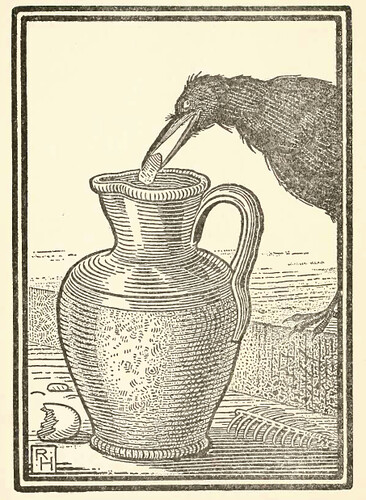
MILLE FABULAE WIDGET: The fable from the Mille Fabulae et Una widget is Cornix et Urna, another story about a thirsty animal who is also very wise: Sitibunda cornix reperit urnam aqua plenam, sed erat urna profundior quam ut exhauri a cornice possit. Conatur igitur vano molimine aquam effundere, sed non valet. Lectos igitur ex arena lapillulos iniectat. Hoc modo aqua levatur et cornix bibit. Necessitas est ingenii mater.

Corvus et Urna

Wednesday, April 11, 2012

Latin Without Latin: Multorum Disce Exemplo

Given the very positive feedback about the "Latin Without Latin" English essays (thanks to all for your comments!), I'll be alternating them with the regular Bestiaria Round-Ups. The previous essays were Essay #1: HomicidiumEssay #2: Cursu Praetervehor Omnes and Essay #3: Sic Transit Gloria Mundi. Here is the new essay: 

Multórum disce exémplo, quae facta sequáris,
Quae fúgias: vita est nobis aliéna magístra.


Round-Up: April 11

Here is a round-up of today's blog posts - and for previous posts, check out the Bestiaria Latina Blog archives. Thanks again to all the positive feedback about the "Latin Without Latin" essays; I'll have another one of those available later today!

HODIE: ante diem tertium Idus Apriles.

GOOGLE BOOKS: Today's Google Books are Skop's Epigrammatum libri quatuor and Larebeke's Epulum Linguarum.

MYTHS and LEGENDS: The art image for today's legend shows Ixion; you can also see the legends for the current week listed together here.


TODAY'S DISTICHS and EMBLEMS: All the distichs come with vocabulary lists!

RHYMING DISTICHS: The two new Rhyming Distichs are Esto memor mortis, Esto memor mortis fueris dum corpore fortis; / Mors stans ante fores dicit tibi: corrige mores! and Dicit Fortuna, Dicit Fortuna: rotula si niterer una / Et non mutarer, tunc non fortuna vocarer.

CATO'S DISTICHS: The two new Cato Distichs are Cum tibi praevalidae, Cum tibi praevalidae fuerint in corpore vires, / Fac sapias: sic tu poteris vir fortis haberi; and Cum tibi praeponas, Cum tibi praeponas animalia bruta timore, / Unum hominem scito tibi praecipue esse timendum.

MARTIAL'S DISTICHS: The two new Martial Distichs are Nobilis et lanis, Nobilis et lanis et felix vitibus Aulon / det pretiosa tibi vellera, vina mihi; and Hospes eras nostri, Hospes eras nostri semper, Matho, Tiburtini; / Hoc emis. Inposui: rus tibi vendo tuum.

VERINUS DISTICHS: The two new distichs by Verinus are Quae Videntur Sunt Fluxa, Quod cernis, nihil est: volat atri turbinis instar; / Sed quod non cernis, esse perenne putes; and Omnia Patienter Ferenda, Quod tibi contigerit, patienter ferre memento, / Cum certum est fieri numine cuncta Dei.

OWEN'S DISTICHS: The two new Owen epigrams, with Harvey's English versions, are De Amore et Fide, Fecerunt amor atque fides divortia: nusquam / Non suspecta fides, suspiciosus amor; and Orbis, In mundo nil constat: in orbem vertitur orbis. / Quid mirum, recti quod sit in orbe nihil?

CAMERARIUS'S EMBLEMS: The two new emblems are Nec Sperno, Nec Metuo, Nec pugnam occipias, sed te oppugnantibus offer: / Sic hostis poteris victor abire tui; and Mihi Pascua Soli, Solus opima tenet bos pascua, parta tuetur; / Tu quoque sic dotes, solus habeto tuas.

ROLLENHAGEN'S EMBLEMS: The two new emblems are Donec Totum Impleat Orbem, Augescit, donec totum luna impleat orbem; / Gallorum talis gloria regis erat; and Virtus Lorica Fidelis, Rebus in adversis, Virtus lorica fidelis, / Negligit ambiguae tela maligna Deae.


TODAY'S MOTTOES and PROVERBS:

3-WORD MOTTOES: Today's 3-word motto is Non sufficit orbis (English: The world is not enough).

3-WORD PROVERBS: Today's 3-word proverb is Surge, qui dormis (English: Rise up, you who sleep).

RHYMING PROVERBS: Today's proverb with rhyme is: O dives, dives! non omni tempore vives! (English: Rich man, rich man! You will not live forever).

VULGATE VERSES: Today's verse is Concident gladios suos in vomeres et hastas suas in ligones (Micah 4:3). For a translation, check out the polyglot Bible, in English, Hebrew, Latin and Greek, at the Sacred Texts Archive online.

ELIZABETHAN PROVERBS: Here is today's proverb commentary, this time by Conybeare: Asinus auriculas movet: The asse waggeth his eares. A proverbe applied unto them which although they lacke learninge, yet will they babble and make a countenance as though they knewe somewhat.

TODAY'S FABLES and STORIES:

ANECDOTE OF THE DAY: Today's anecdote is Tarquinius et Tullia , the story of Servius' daughter Tullia and her husband Tarquinius, later known as Tarquinius the Proud.

FABULAE FACILES WIDGET: The fable from the Fabulae Faciles widget is Ursus et Apes, a story about excessive anger (this fable has a vocabulary list).

MILLE FABULAE WIDGET: The fable from the Mille Fabulae et Una widget is Leo, Vacca, Capra, et Ovis, the famous fable of the lion's share.

AESOP IN ENGLISH VERSE: Today's fable from the English verse widget is The Stag and the Fawn, the story of why the stag is afraid, despite its mighty horns.

MILLE FABULAE: The "chunk" of Mille Fabulae et Una today is Fable 711, Malus et Rusticus, through Fable 720, Platanus et Xerxes, including Platanus et Viatores, the story the ungrateful humans and shade tree: Viatores, aestatis tempore nimio meridiani solis calore laborantes, cum platanum vidissent, sub eam confugerunt, eiusque strati sub umbra recubuerunt. Ad eam deinde conversis oculis, “Quam est inutilis,” inter se aiebant, “haec arbor hominibus et infructuosa!” Illa vero respondens, “O vos,” inquit, “ingratos, qui meo adhuc beneficio fruentes, inutilem me infructuosamque vocatis.”

Platanus et Viatores

Monday, April 9, 2012

Latin Without Latin: Sic Transit Gloria Mundi

Given the very positive feedback about the "Latin Without Latin" English essays (thanks to all for your comments!), I'll be alternating them with the regular Bestiaria Round-Ups. The previous essays were Essay #1: Homicidium and Essay #2: Cursu Praetervehor Omnes. And here is the new one:


Cérnite, mortáles: sic transit glória mundi;
Noster honor cinis, et púlveris umbra sumus.