Saturday, January 19, 2013

Latin Proverbs and Fables Round-Up: January 19

Here is a round-up of today's proverbs and fables - and for previous posts, check out the Bestiaria Latina Blog archives. You can keep up with the latest posts by using the RSS feed, or you might prefer to subscribe by email.

HODIE (Roman Calendar): ante diem quartum decimum Kalendas Februarias.

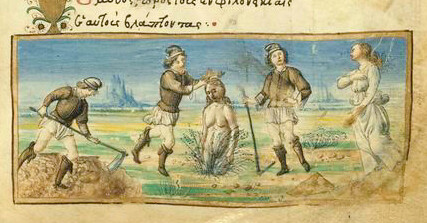
MYTHS and LEGENDS: The art image for today's legend shows Antigone; you can also see the legends for the current week listed together here.


TODAY'S MOTTOES and PROVERBS:

TINY MOTTOES: Today's tiny motto is: Veritas superabit (English: The truth will triumph).

3-WORD PROVERBS: Today's 3-word verb-less proverb is E pluribus unum (English: One from many)

AUDIO PROVERBS: Today's audio Latin proverb is Fortuna gloriae carnifex (English: Fortune is the butcher of glory). To read a brief essay about this proverb and to listen to the audio, visit the Latin Via Proverbs blog.

PUBLILIUS SYRUS: Today's proverb from Publilius Syrus is: Ames parentem, si aequus est; si aliter, feras (English: You should love your parent if he is right; if not, bear with him).

ERASMUS' ANIMALS: Today's animal proverb from Erasmus is Ars multa vulpi, ast una echino maxima (English: The fox has many a trick, but the hedgehog has just one big trick; from Adagia 1.5.18).

BREVISSIMA: The distich poster for today is Nocitura. Click here for a full-sized view; the poem has a vocabulary list and an English translation, too.


And here is today's proverbial lolcat - for a discussion, see Google+.


TODAY'S FABLES AND SONGS:

FABULAE FACILES: The fable from the Fabulae Faciles widget is Corvus et Mercurius, a funny story about a mendacious crow (this fable has a vocabulary list).

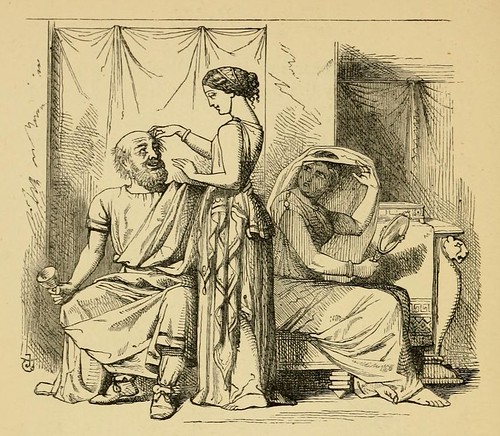
MILLE FABULAE: The fable from the Mille Fabulae et Una widget is Concubinae Duae, the story of an older man and his two lovers.
Vir et Uxores Duae

Friday, January 18, 2013

Sundial: PEREUNT ET IMPUTANTUR

This sundial is from St Buryan Church in Cornwall, England and is dated to the year 1747. The Latin inscription means "They perish and are reckoned," meaning that the hours and days perish and are reckoned to our accounts.

Pereunt et Imputantur


The words are from the Roman poet Martial, 5.20. Here are the closing lines in Latin and in an English translation by Robert Louis Stevenson; for the complete poem in Latin and in Stevenson's English translation, see this blog post at Laudator Temporis Acti.
Now neither [of us] lives unto himself, alas!
And the good suns we see, that flash and pass
And perish; and the bell that knells them cries:
"Another gone: O when will ye arise?"

Nunc vivit necuter sibi, bonosque
soles effugere atque abire sentit,
qui nobis pereunt et inputantur.
Quisquam vivere cum sciat, moratur?
Here is Cowley's English rendering of those lines (cited by Eden):
Now to himself, alas! does neither live
But sees good suns of which we are to give
A strict account, set, and doth march away:
Knows a man how to live, and does he stay?
You can see the same inscription on the famous astronomical clock of Exeter Cathedral. The motto is discussed in Eden expanded edition of Gatty's Book of Sun Dialswith a long list of other examples.

Additional views of the sundial: 


Thursday, January 17, 2013

Latin Proverbs and Fables Round-Up: January 17

Here is a round-up of today's proverbs and fables - and for previous posts, check out the Bestiaria Latina Blog archives. In addition to a free PDF copy of Brevissima: 1001 Tiny Latin Poems, you can also get a free PDF copy of Mille Fabulae et Una: 1001 Aesop's Fables in Latin. If you prefer the heft of a book in your hand, you can get the books in printed form from Lulu.com.

HODIE (Roman Calendar): ante diem sextum decimum Kalendas Februarias.

MYTHS and LEGENDS: The art image for today's legend shows Dirce; you can also see the legends for the current week listed together here.


TODAY'S MOTTOES and PROVERBS:

3-WORD MOTTOES: Today's 3-word motto is Invigila, sic vinces (English: Keep watch; in this way, you will win).

3-WORD PROVERBS: Today's 3-word proverb is Nemo effugit futurum (English: No one escapes what will be).

RHYMING PROVERBS: Today's proverb with rhyme is: Hunc fidum dico, bene qui succurrit amico (English: If a man rightly comes to the aid of a friend, I deem that man faithful).

VULGATE VERSES: Today's verse is Diliges proximum tuum, sicut te ipsum (Gal. 5:14). For a translation, check out the polyglot Bible, in English, Hebrew, Latin and Greek, at the Sacred Texts Archive online.

ELIZABETHAN PROVERBS: Here is today's proverb commentary, this time by Taverner: Flamma fumo est proxima: The flame is next to the smoke. This Proverbe teachethe us, that perill and daunger ought in time to be fledde, and that he whiche would eschue evill, must first eschue the occasion of evill, accordinge to our English Proverbe. He that wil no hurt do, must do nothinge that long there to. As for exemple, he that woulde not be evill corupted, let him absteine from the companie of naughtie personnes, he that will not lye with hoores, let him absteine from kissinges and other wanton interteinmentes.

BREVISSIMA: The distich poster for today is Vir Bonus, Vir Magnus. Click here for a full-sized view; the poem has a vocabulary list and an English translation, too.


And here is today's proverbial lolcat:


TODAY'S FABLES AND SONGS:

FABULAE FACILES: The fable from the Fabulae Faciles widget is Asinus et Grammaticus, a hilarious story about a sharp-witted teacher (this fable has a vocabulary list).

MILLE FABULAE: The fable from the Mille Fabulae et Una widget is Fortuna et Agricola, the story of a farmer who found a buried treasure.


Rusticus et Fortuna

Tuesday, January 15, 2013

Latin Proverbs and Fables Round-Up: January 15

Here is a round-up of today's proverbs and fables - and for previous posts, check out the Bestiaria Latina Blog archives. If you have not downloaded a free PDF copy of Brevissima: 1001 Tiny Latin Poems, it's ready and waiting! Meanwhile, I'm slowly but surely adding poster images and English translations over at the Brevissima blog.

HODIE (Roman Calendar): ante diem duodevicesimum Kalendas Februarias.

MYTHS and LEGENDS: The art image for today's legend shows Tityus; you can also see the legends for the current week listed together here.


TODAY'S MOTTOES and PROVERBS:

TINY PROVERBS: Today's tiny proverb is: Atlas caelum (English: Atlas holds up the sky - of course, the elliptical Latin proverb doesn't specify the verb, but English needs the verb).

3-WORD MOTTOES: Today's 3-word verb-less motto is In veritate victoria (English: In truth, victory).

ANIMAL PROVERBS: Today's animal proverb is Qui corvis natus est, non submergitur aquis (English: He who is born for the crows does not drown in the water).

POLYDORUS: Today's proverb from Polydorus is: Reddet deus unicuique iuxta illius opera (English: God will give to each according to his works).

PROPER NAME PROVERBS: Today's proper name proverb from Erasmus is In Orci culum incidas (English: May you fall into Orcus's butthole; from Adagia 2.10.68 - as if being in the underworld of Orcus was not bad enough! Erasmus describes it as sermo perniciem et extremum exitium imprecantis, "words spoken by someone cursing another person with ruin and utter disaster" - ha!).

GREEK PROVERBS: Today's proverb is Σὺν Ἀθηνᾷ καὶ χεῖρας κίνει (English: Together with Athena, you also need to move your arms - an allusion to the wonderful fable of the shipwrecked Athenian).

BREVISSIMA: The distich poster for today is Bene Agitur. Click here for a full-sized view; the poem has a vocabulary list and an English translation, too.


And here is today's proverbial lolcat:


TODAY'S FABLES AND SONGS:

FABULAE FACILES: The fable from the Fabulae Faciles widget is Lupus et Canis Saginatus, a wonderful story in praise of freedom (this fable has a vocabulary list).

MILLE FABULAE: The fable from the Mille Fabulae et Una widget is Grus et Lupus, the famous story of a crane who foolishly did a favor for a wolf.

lupus et grus

Monday, January 14, 2013

Special Edition: #PDFTribute to Aaron Swartz

I've been thinking a lot about Aaron Swartz this weekend, and I read a wonderful blog post here - Ten simple ways to share PDFs of your papers - which prompted me to share the PDFs for my four books here in one place as a #PDFTribute


For any of you who read my blog via email, you are reading the blog thanks to Aaron Swartz who, among his many accomplishments, helped to create RSS, which is the technology behind those emails. For a heartfelt reflection from someone who knew Aaron Swartz well, here is danahboyd: processing the loss of Aaron Swartz

So, here are the books in PDF format - please download them, read them, share them! Perhaps some of you have downloaded one or two of them over the years, but this is the first time I have put all four in one place. The errata lists for each are available at their respective websites.


Brevissima: 1001 Tiny Latin Poems
PDF - Website


Mille Fabulae et Una: 1001 Aesop's Fables in Latin
PDF - Website


Latin Via Proverbs: 4000 Proverbs, Mottoes and Sayings for Students of Latin
PDF - Website


Vulgate Verses: 4000 Sayings from the Bible for Teachers and Students of Latin
PDF - Website


Sunday, January 13, 2013

Latin Proverbs and Fables Round-Up: January 13

Here is a round-up of today's proverbs and fables - and for previous posts, check out the Bestiaria Latina Blog archives. You can keep up with the latest posts by using the RSS feed, or you might prefer to subscribe by email.

HODIE (Roman Calendar): Idus Ianuariae, the Ides of January.

MYTHS and LEGENDS: The art image for today's legend shows The Abduction of Helen; you can also see the legends for the current week listed together here.


TODAY'S MOTTOES and PROVERBS:

TINY MOTTOES: Today's tiny motto is: Virtute doloque (English: By strength and by stealth).

3-WORD PROVERBS: Today's 3-word verb-less proverb is Terra devoratrix omnium (English: Earth is the devourer of all things)

AUDIO PROVERBS: Today's audio Latin proverb is Meum mihi, suum cuique carum (English: To me mine is dear, and to each person his own is dear). To read a brief essay about this proverb and to listen to the audio, visit the Latin Via Proverbs blog.

PUBLILIUS SYRUS: Today's proverb from Publilius Syrus is: Nec mortem effugere quisquam nec amorem potest (English: You can escape neither love nor death).

ERASMUS' ANIMALS: Today's animal proverb from Erasmus is Ex ipso bove lora sumere (English: To get the reins from the ox himself; from Adagia 1.2.77 - the oxen are their own worst enemy, supplying the leather that makes the reins).

BREVISSIMA: The distich poster for today is Quod Paravit Virtus, Retinebis. Click here for a full-sized view; the poem has a vocabulary list and an English translation, too.


And here is today's proverbial lolcat:


TODAY'S FABLES AND SONGS:

FABULAE FACILES: The fable from the Fabulae Faciles widget is Avarus et Poma Marcescentia, a wonderful story about a miserly father and a generous son (this fable has a vocabulary list).

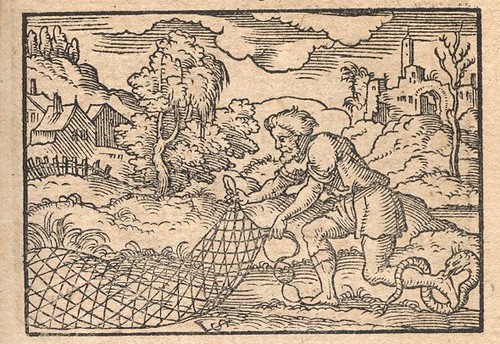
MILLE FABULAE: The fable from the Mille Fabulae et Una widget is Vipera et Auceps, the story about the hunter hunted.

Auceps et Vipera - Osius