Monday, June 30, 2008

Round-Up: June 30

Here is a round-up of today's blog posts - and for previous posts, check out the Bestiaria Latina Blog archives. You can keep up with the latest posts by using the RSS feed, or you might prefer to subscribe by email.

Learning Latin Links. The link for today is Latinum - the Latin Learning podcast from London (Evan Millner's fantastic online Latin course with complete audio).

Verbosum: Latin and English Vocabulary-Building. The Latin word root for today is PO and BIB, which gives rise to all sorts of English words, including potion and beer. If you are not clear on how PO and BIB can be the "same" root, definitely check out this post (think: reduplication... voicing... and there you'll have it!).

Latin Proverb of the Day: Today's proverb is Innocentia eloquentia (English: Innocence is eloquence; in other words: innocence speaks for itself). You can use the Javascript to include the Latin proverb of the day automatically each day on your webpage, blog, or wiki. Meanwhile, to read a brief essay about this proverb, visit the AudioLatinProverbs.com website.

Greek Proverb of the Day: Today's proverb is Τὰς δεσποίνας αἱ κύνες μιμούμεναι (English: Dogs resemble their owners - or, with the gender matching the Greek - bitches resemble their mistresses). You can use the Javascript to include the Greek proverb of the day automatically each day on your webpage, blog, or wiki - and each Greek proverb also comes with a Latin version.

LatinViaProverbs.com: I'm working away on the online guide to Latin Via Proverbs, with grammar notes and English translations, working through the book group by group. Today's group includes this great saying about knowledge and learning: Omnia scire volunt omnes sed discere nolunt.

RomanSudoku.com: For your numerical amusement, it's Sudoku played with Roman numerals! You can visit the blog for a large version of today's puzzle, easier to print out and play.

How-To Technology Tips. Today's technology tip is about Del.icio.us - a wonderful tool for tracking down great online resources.

Latin Via Fables: At the blog today I've provided a sample fable from a great old textbook which contains fables from LaFontaine in Latin prose! The fable I chose is the story of the fox and the grapes, which is the ancient source of a saying still famous today: Sour grapes! Here is the illustration:


Some dynamic content may not display if you are reading this blog via RSS or through an email subscription. You can always visit the Bestiaria Latina blog to see the full content, and to find out how to subscribe to the latest posts.

Thursday, June 26, 2008

Round-Up: June 26

Here is a round-up of today's blog posts - and for previous posts, check out the Bestiaria Latina Blog archives. You can keep up with the latest posts by using the RSS feed, or you might prefer to subscribe by email.

Learning Latin Links. The link for today is Carmina Popularia - some pop songs translated into Latin, including Puff the Magic Dragon!

Verbosum: Latin and English Vocabulary-Building. The Latin word root for today is AC (or ACU), which gives rise to all sorts of English words, from acupuncture to eagerness!

Latin Proverb of the Day: Today's proverb is Canes timidi vehementius latrant quam mordent (English: Timid dogs bark more fiercely than they bite - in other words, their bark is worse than their bite). You can use the Javascript to include the Latin proverb of the day automatically each day on your webpage, blog, or wiki. Meanwhile, to read a brief essay about this proverb, visit the AudioLatinProverbs.com website.

Greek Proverb of the Day: Today's proverb is Ἅπαντα τοῖς καλοῖς ἀνδράσι πρέπει. (English: All things befit men who are good). You can use the Javascript to include the Greek proverb of the day automatically each day on your webpage, blog, or wiki - and each Greek proverb also comes with a Latin version.

AudioLatin.com: Proverbs: Here is the audio for 10 more Latin proverbs from Latin Via Proverbs - just the audio, but there is a link to a page where you can get English translations and commentary on the proverbs, too. Today's group includes that famous Latin saying: Sic transit gloria mundi.

Vulgate Verses. The Vulgate Verses book is now available (from Lulu Publishers), and I'm commenting on various verses included in that book for their special qualities in Latin. Today's verse is from the Gospel of John, Ego sum vitis, vos palmites, and it provides another great example of parallel structure.

How-To Technology Tips. Today's technology tip is about Editing Images with Picnik.com - a free online tool for editing your images (cropping, resizing, etc.).

Latin Via Fables: I've added a Perry fable type, with a Latin version from an 18th-century Latin textbook, plus an illustration, to the blog today. This time it is Perry 158, the story of the old woman who threatened to throw a baby to the wolves. Here is the illustration:


Some dynamic content may not display if you are reading this blog via RSS or through an email subscription. You can always visit the Bestiaria Latina blog to see the full content, and to find out how to subscribe to the latest posts.

Wednesday, June 25, 2008

Round-Up: June 25

Here is a round-up of today's blog posts - and for previous posts, check out the Bestiaria Latina Blog archives. You can keep up with the latest posts by using the RSS feed, or you might prefer to subscribe by email.

Learning Latin Links. The link for today is Ephemeris - the newspaper in Latin that you can read online.

Verbosum: Latin and English Vocabulary-Building. The Latin word root for today is PA (and also PASC), which gives rise to all sorts of English words, from pastor to pester!

Latin Proverb of the Day: Today's proverb is Ego si bonam famam mihi servavero, sat ero dives (English: If I will keep my good reputation, I will be rich enough.). You can use the Javascript to include the Latin proverb of the day automatically each day on your webpage, blog, or wiki. Meanwhile, to read a brief essay about this proverb, visit the AudioLatinProverbs.com website.

Greek Proverb of the Day: Today's proverb is Ἁ δὴ χεὶρ την χεῖρα νίζει. (English: The one hand washes the other). You can use the Javascript to include the Greek proverb of the day automatically each day on your webpage, blog, or wiki - and each Greek proverb also comes with a Latin version.

Grammatice. As one of my new summer projects, I'm publishing some notes here about grammar and linguistics that I hope will be useful for Latin students and teachers. Today's post is about Latin semivowels and the letters J and U - and why you can spell the same word in Latin iuvenis, juvenis, or iuuenis.

Latin Via Fables: I've a fable from the Gesta Romanorum to the blog today. This time it is Perry 563, the story of the grateful lion (best known as "Androcles and the Lion"). Here is the illustration:


Some dynamic content may not display if you are reading this blog via RSS or through an email subscription. You can always visit the Bestiaria Latina blog to see the full content, and to find out how to subscribe to the latest posts.

Monday, June 23, 2008

Round-Up: June 23

Here is a round-up of today's blog posts - and for previous posts, check out the Bestiaria Latina Blog archives. You can keep up with the latest posts by using the RSS feed, or you might prefer to subscribe by email.

AudioLatinProverbs.com: In addition to the Latin proverb of the day, I've added a new essay to the AudioLatinProverbs.com blog about the saying Elephantus culicem non curat (In English: An elephant doesn't notice a gnat.). Listen to the audio, and read an Aesop's fable about how a camel (like the elephant) doesn't notice a gnat!

Learning Latin Links. The link for today is Diederich, The Frequency of Latin Words - a great study of Latin vocabulary frequency for various Latin authors.

Verbosum: Latin and English Vocabulary-Building. The Latin word root for today is TAC, which gives rise to all sorts of English words, along with the fascinating Roman goddess "Tacita," the goddess whose name must remain silent, the goddess whose name cannot be spoken.

Greek Proverb of the Day: Today's proverb is Σύντομος ἡ πονηερία, βραδεῖα ἡ ἀρετή. (English: Wickedness is a short-cut; virtue is the long way). You can use the Javascript to include the Greek proverb of the day automatically each day on your webpage, blog, or wiki - and each Greek proverb also comes with a Latin version.

How-To Technology Tips. Today's technology tip is about Site-Specific Searches with Google - using examples from the Latin Library and Sacred Texts Archive online.

Latin Via Fables: I've added a new Latin fable type, plus an illustration, to the blog today. This time it is a story from the medieval Liber Kalilae et Dimnae, about The Camel in the Court of the Lion-King. If you have not read a typical medieval folktale before, I think you will be surprised at how easy it is! Here is the illustration:


Some dynamic content may not display if you are reading this blog via RSS or through an email subscription. You can always visit the Bestiaria Latina blog to see the full content, and to find out how to subscribe to the latest posts.

Friday, June 20, 2008

Round-Up: June 20 - Google Books

Apologies for the abrupt halt of activities this week: I become COMPLETELY absorbed in compiling all the Latin editions of Aesop that I could find at GoogleBooks. What an amazing adventure!

GoogleBooks has now scanned enough books from enough libraries that I have been able to pull together a very respectable online collection that represents all the major collections of Aesop's fables in Latin - ancient verse, medieval verse and prose, Renaissance verse and prose, plus all kinds of interesting modern materials. Using the full view books at GoogleBooks, I have been able to link directly to the page on which each fable appears... and the total is now over FOUR THOUSAND Latin fables, representing variations on approximately 1000 different Aesopic plots (about 600 ancient fable types, plus hundreds of Renaissance and modern contributions to the tradition).

Here is just a simple list of what I've compiled at the Aesopus website, in the hopes that some of these books might be useful to you, too. If you have not yet ventured into the amazing world of GoogleBooks, I recommend it very highly indeed!

Phaedrus. The earliest extant collection of Aesop's fables from the ancient world, comprising slightly over 100 fables.

Avianus. Another very inlfuential early collection of Aesop's fables in verse (approximately 40 fables).

Ademar. An 11th-century collection of appx. 70 fables compiled by Ademar of Chabannes.

Romulus in Prose. I have included these collections edited by Hervieux: Romulus Anglicus (appx. 140 fables), Romulus Ad Rufum (appx. 60 fables), Romulus Vulgaris (appx. 80 fables), Arctopolitanae (appx. 50 fables), Romulus of Marie de France (appx. 20 fables), and Vienna (2 manuscripts, for a total of appx. 130 fables).

Romulus in Meter. Approximately 40 fables in verse (dactylic hexameter).

Romulus in Rhyme. Approximately 50 fables in rhyming verse.

Walter of England. Approximately 60 fables in verse.

Alexander of Neckham. Approximately 40 fables in verse by a late 12th-century English scholar.

Vincent of Beauvais. Appx. 30 fables found in his Speculum historiale (13th century).

Odo of Cheriton. A marvelous collection of appx. 120 fables by a thirteenth-century preacher.

John of Sheppey. A 14th century collection of appx. 70 fables, drawing on both Romulus and Odo.

Speculum Sapientiae. An odd 13th-century work, not Aesopic, with appx. 100 animal "stories."

Dialogus creaturarum. An odd 14th-century work, also not Aesopic, with appx. 100 nature tales.

Steinhowel. The first edition of Aesop printed in book form, including appx. 140 fables.

Baldo. A Renaissance verse collection (15th century?) of appx. 30 fables from eastern sources.

Abstemius. A delightful collection of 100 "original" Renaissance fables which in turn became influential in the later Aesop tradition.

Aesop Phryx (Madrid). A frequently reprinted collection of appx. 350 fables (this particular edition printed at Madrid).

Hieronymus Osius. A large collection of fables in verse (almost 300 of them), including the fables of Abstemius!

Caspar Barth. Approximately 70 fables in verse, written in a variety of meters.

Faernus. A lovely collection of 100 fables in verse by the sixteenth-century Italian poet Gabriele Faerno.

Candidus Pantaleon. Approximately 150 fables in verse, written by the 16th-century poet Candidus Pantaleon.

Marquardus Gudius. A collection of appx. 30 fables in verse by the 17th-century scholar, Marquardus Gudius.

Johann Christ. Approximately 50 fables in verse by this 18th-century scholar.

Desbillons. Massive collection of over 500 verse fables by the 18th-century Jesuit scholar Francis Desbillons.

De Furia. Excellent collection of over 400 Greek fables with Latin translations from the early 19th century.

Jauffret. Appx. 120 of Jauffret's fables (early 19th century) translated into Latin verse.

LaFontaine. A second-year Latin textbook with 50 fables of LaFontaine in Latin prose.

Eton. Marvelous 18th-century edition of appx. 150 Aesop's fables in Latin and Greek prepared for Eton schoolboys.

Clarke's Reader. An 18th-century bilingual edition of the fables for schoolchildren, containing appx. 200 fables.

J&D and Via Latina Readers. These are 19th-century Latin readers for schoolchildren, including appx. 50 fables.


Some dynamic content may not display if you are reading this blog via RSS or through an email subscription. You can always visit the Bestiaria Latina blog to see the full content, and to find out how to subscribe to the latest posts.
Monday, June 16, 2008

Round-Up: June 16

Here is a round-up of today's blog posts - and for previous posts, check out the Bestiaria Latina Blog archives. You can keep up with the latest posts by using the RSS feed, or you might prefer to subscribe by email.

Learning Latin Links. The link for today is Latin Teaching Materials at Saint Louis University - including a great online edition of the Gesta Romanorum, one of the best Latin story collections of all time!

Verbosum: Latin and English Vocabulary-Building. The Latin word root for today is RID, which gives rise to all sorts of English words, including ridicule and derisory.

Latin Proverb of the Day: Today's proverb is Dum stertit cattus, numquam sibi currit in os mus (English: When the cat is snoring, a mouse never runs into its mouth.). You can use the Javascript to include the Latin proverb of the day automatically each day on your webpage, blog, or wiki. Meanwhile, to read a brief essay about this proverb, visit the AudioLatinProverbs.com website.

Greek Proverb of the Day: Today's proverb is Ὀυχ' ὁ τόπος τὸν ἄνδρα, ἀλλ' ὁ ἀνὴρ αὐτὸν ἔντιμον ποιεῖ. (English: The place does not make the man honorable; rather, the man makes the place honorable). You can use the Javascript to include the Greek proverb of the day automatically each day on your webpage, blog, or wiki - and each Greek proverb also comes with a Latin version.

RomanSudoku.com: For your numerical amusement, it's Sudoku played with Roman numerals! You can visit the blog for a large version of today's puzzle, easier to print out and play.

How-To Technology Tips. Today's technology tip is about Troubleshooting Greek Fonts - I hope this will help if you are having trouble seeing the Greek in the Greek Proverb of the Day, for example.

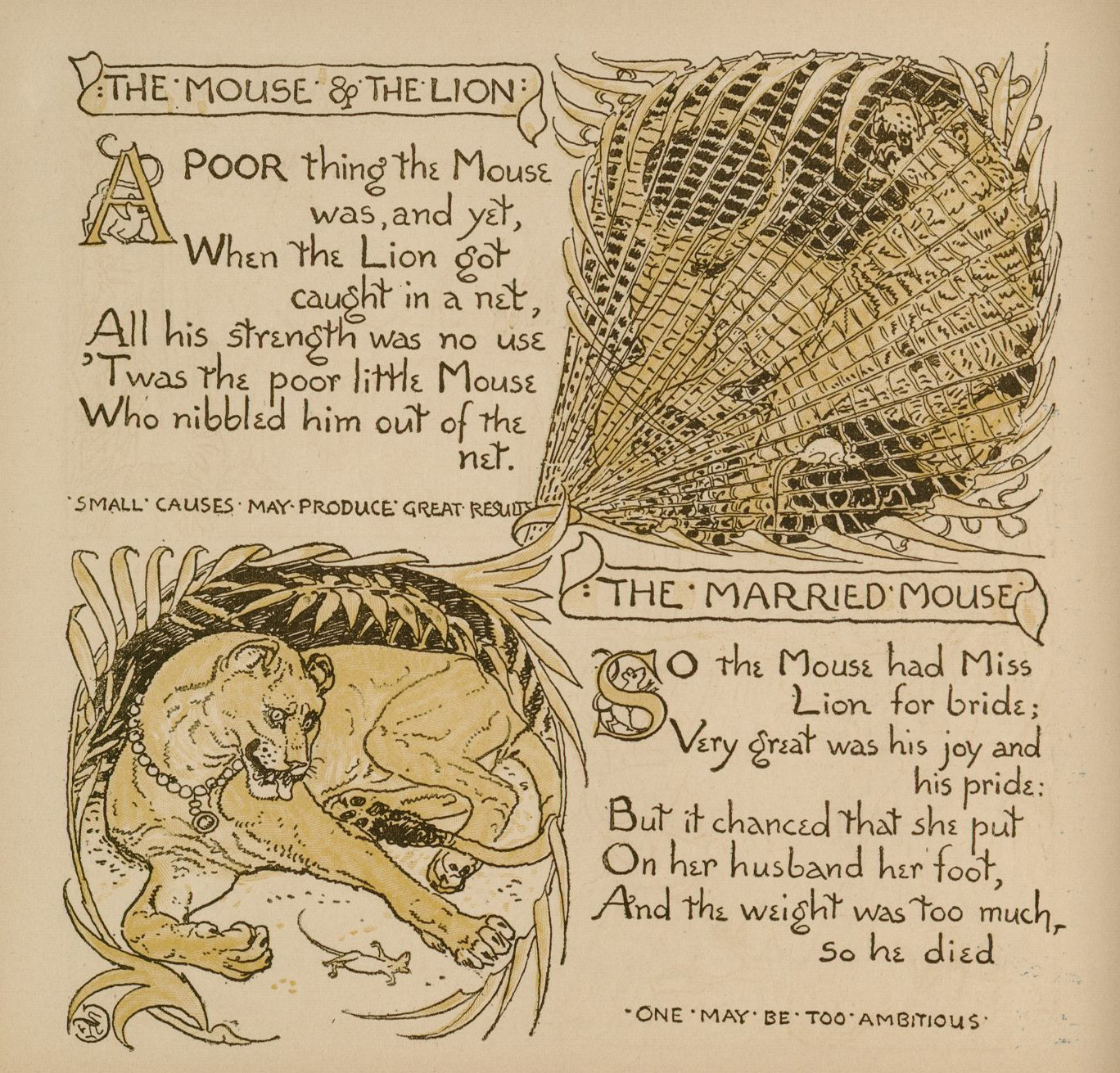
Latin Via Fables: I've added a Perry fable type, with a Latin version by Ademar plus an illustration, to the blog today. This time it is Perry 150, the story of the lion who was rescued by a mouse... and what happened when the mouse married the lion's daughter as his reward! Here is the illustration:


Some dynamic content may not display if you are reading this blog via RSS or through an email subscription. You can always visit the Bestiaria Latina blog to see the full content, and to find out how to subscribe to the latest posts.