Monday, April 9, 2012

Round-Up: April 9

Here is a round-up of today's blog posts - and for previous posts, check out the Bestiaria Latina Blog archives. Thanks for all the helpful feedback about the "Latin Without Latin" essays - I am really excited about doing more of these. I'm not sure how much time I will have during the last weeks of school, but I am going to try to publish one of those essays on alternating days with the regular round-up. Since it sounds like the essays can be of interest to people at all levels of Latin, I'm hoping they can be useful to many readers of the blog!

HODIE: ante diem quintum Idus Apriles.

GOOGLE BOOKS: Today's Google Books are Harrison's Prolegomena to the Study of Greek Religion and Meazza's Extemporanea poesis.

MYTHS and LEGENDS: The art image for today's legend shows The Danaids; you can also see the legends for the current week listed together here.


TODAY'S DISTICHS and EMBLEMS: All the distichs come with vocabulary lists!

RHYMING DISTICHS: The two new Rhyming Distichs are Sta pes, Sta pes, sta mi pes, sta pes, nec labere, mi pes! / Ni tu stes, mi pes, lectus erunt lapides; and Qui benefactorum, Qui benefactorum non vult memor esse suorum, / Non est laudari dignus, nec dignus amari.

CATO'S DISTICHS: The two new Cato Distichs are Cum te detineat, Cum te detineat Veneris damnosa libido, / Indulgere gulae noli, quae ventris amica est; and Quod tibi suspectum est, Quod tibi suspectum est, confestim discute quid sit; / Namque solent, primo quae sunt neglecta, nocere.

MARTIAL'S DISTICHS: The two new Martial Distichs are Murices, Sanguine de nostro tinctas, ingrate, lacernas / induis, et non est hoc satis, esca sumus; and Jus tibi natorum, Jus tibi natorum vel septem, Zoile, detur, / dum matrem nemo det tibi, nemo patrem.

VERINUS DISTICHS: The two new distichs by Verinus are Mores Parentis, Saepe patris mores imitatur filius infans: / Qualis erat mater, filia talis erit; and Quales Principes, Tales Populi, Si studia et mores populi cognoscere curas, / Res facilis: vitam principis inspicias.

OWEN'S DISTICHS: The two new Owen epigrams, with Harvey's English versions, are Anagramma: Galenus Angelus, Angelus es bonus anne malus, Galene? Salutis / Humanae custos angelus, ergo bonus; and Foeneratoris Apologia, Quo mihi divitiae, si non conceditur uti? / Aera nitent usu, me iuvat usus opum.

CAMERARIUS'S EMBLEMS: The two new emblems are Quantum Mutatus Ab Illo, Corniger ut blandus fit amictus fronde, at inertem, / Frugi vix facias, ni bene pressus eat; and Dulce Est Desipere In Loco, Tempora stultitiam, gravitatem saepe vicissim, / Deposcunt; prudens desipit atque sapit.

ROLLENHAGEN'S EMBLEMS: The two new emblems are Victrix Fortunae Sapientia, Victrix Fortunae, Sapientia sancta Tonantis / Durat et, exsuperans cuncta pericla, viget; and Aut Mors Aut Vita Decora, Alterutrum optandum est aut mors aut vita decora; / Turpe fuga vitam quaerere: malo mori.


TODAY'S MOTTOES and PROVERBS:

TINY PROVERBS: Today's tiny proverb is: Grata novitas (English: Novelty is pleasing).

3-WORD MOTTOES: Today's 3-word verb-less motto is Multum, non multa (English: Much, not many - a proverb against multitasking).

ANIMAL PROVERBS: Today's animal proverb is Si cantes asino, crepitus tibi reddet ab ano (English: If you sing to a donkey, he'll return you a fart from his rump).

POLYDORUS: Today's proverb from Polydorus is: Non in solo pane vivit homo (English: Man does not live by bread alone).

PROPER NAME PROVERBS: Today's proper name proverb from Erasmus is Zaleuci lex (English: A law of Zaleucus; from Adagia 2.10.63 - Zaleucus of Locris was supposedly the author of the first Greek law code, which was proverbial for its severity; for example, if someone was convicted of adultery, their eyes were gouged out as punishment).

GREEK PROVERBS: Today's proverb is Ὄνος λύρας ἀκούων κινεῖ τὰ ὦτα (English: When the donkey listens to the lyre, he moves his ears - a good proverb to go with the Latin proverb above).

TODAY'S FABLES and STORIES:

ANECDOTE OF THE DAY: Today's anecdote is Dianae Templum, the temple of Diana.

FABULAE FACILES WIDGET: The fable from the Fabulae Faciles widget is Avarus et Aureorum Sacculus, a wonderful story about a miser and his money (this fable has a vocabulary list).

MILLE FABULAE: The "chunk" of Mille Fabulae et Una today is Fable 701, Pulex et Abbas, through Fable 710, Malus Exspoliata, including Quercus et Glires, the story of the oak and the dormice - probably my favorite of all the ecological Aesop's fables!

AESOP IN ENGLISH VERSE: Today's fable from the English verse widget is The Sculptor and Mercury, a story of the fate of Hermes in the hands of a sculptor.

MILLE FABULAE WIDGET: The fable from the Mille Fabulae et Una widget is Galli Inter Se Pugnantes, a story in which victory turns out to be defeat in the end, and defeat turns into victory: Galli duo, ut eorum mos est, inter se de ducatu gallinarum acerrime certabant. Qui superior in pugna fuerat, alarum plausu vocisque cantu se victorem fuisse significans, Venere et otio emarcuit. Victus autem, a conspectu gallinarum profugiens, cum cornicibus et pavonibus sese quotidie pugnando exercebat; inferendi vitandique ictus artem ediscebat. Qui, ubi se satis instructum vidit, rediens, adversarium ad pugnam provocatum nullo negotio superavit.
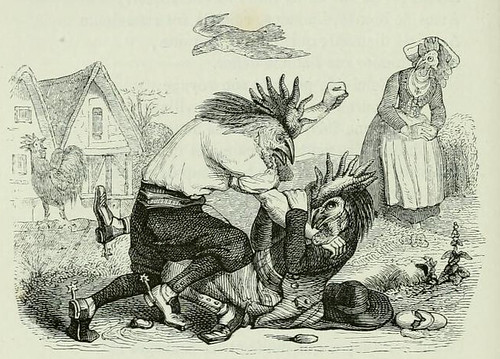
Galli Pugnantes

Saturday, April 7, 2012

Special Edition: Latin Without Latin

In the next phase of getting ready for my great "summer of distichs" project, I'm trying a very new experiment: Latin Without Latin. In other words, I'm writing some essays in English that work through a Latin distich poem phrase by phrase, but without assuming any Latin on the part of the readers. I hope that will be successful - and, of course, the essays should also be useful to Latin students at any level, as well as to Latin teachers. So, I wanted to announce that here and solicit any feedback people can offer. Here are the two essays I did today: Essay #1: Homicidium and Essay #2: Cursu Praetervehor Omnes.


Unus homo per se ipse potest occídere mille;
Unum hóminem possunt vix generáre duo.


Quantúmvis húmilis, cursu tamen ánteit omnes
Strúthio: sic virtus quólibet alta loco est.


Round-Up: April 7

Here is a round-up of today's blog posts - and for previous posts, check out the Bestiaria Latina Blog archives. You can keep up with the latest posts by using the RSS feed, or you might prefer to subscribe by email.

HODIE: ante diem septimum Idus Apriles.

GOOGLE BOOKS: Today's Google Books are Faye's Emblemata et Epigrammata Miscellanea and Stratius's Epigrammatum libri tres.

MYTHS and LEGENDS: The art image for today's legend shows Phaethon; you can also see the legends for the current week listed together here.


TODAY'S DISTICHS and EMBLEMS: All the distichs come with vocabulary lists!

RHYMING DISTICHS: The two new Rhyming Distichs are O bona paupertas, O bona paupertas, ni te Deus ipse tulisset, / Tunc tua durities multis ingrata fuisset; and Saepe malum facimus, Saepe malum facimus minus, ut maiora cavere / Sic mala possimus; sapientes hoc docuere.

CATO'S DISTICHS: The two new Cato Distichs are Quod donare potes, Quod donare potes, gratis concede roganti; / Nam recte fecisse bonis, in parte lucrorum est; and Res age quae prosunt, Res age quae prosunt; rursus vitare memento, / In quis error inest nec spes est certa laboris.

MARTIAL'S DISTICHS: The two new Martial Distichs are Ansere Romano, Ansere Romano quamvis satur Hannibal esset, / ipse suas numquam barbarus edit aves; and Ancillariolum tua, Ancillariolum tua te vocat uxor, et ipsa / Lecticariola est: estis, Alauda, pares.

VERINUS DISTICHS: The two new distichs by Verinus are Ad Magna Praemia Magno Labore, Si te delectant aeternae praemia vitae, / Magna quidem, ne te terreat ergo labor; and Amico Sic Prosis, ut Tibi non Obsis, Sic utere, tuis egeas ne rebus, amicis: / Sarcina namque humeris tota ferenda tuis.

OWEN'S DISTICHS: The two new Owen epigrams, with Harvey's English versions, are Mortificatio, Mortuus ut vivas, vivus moriaris oportet: / Assuesce ergo prius quam moriare mori; and Tentator, Sic, velut in muros mures, in pectora Demon / Invenit occultas, aut facit ipse, vias.

CAMERARIUS'S EMBLEMS: The two new emblems are Astu Non Vi, Lucius imbelli misere succumbere ranae / Cogitur: en vires vincimus ingenio; and Nil Fulgura Terrent, Fulgura non metuo; pellunt ea germina lauri: / Fortunae insultus despicit integritas.

ROLLENHAGEN'S EMBLEMS: The new emblem is Tribulatio Ditat, Tribulat atque quatit segetes, ditescere sperans, / Rusticus, et nobis crux bene nostra facit.


TODAY'S MOTTOES and PROVERBS:

TINY MOTTOES: Today's tiny motto is: Tenebo (English: I will have it in my grasp).

3-WORD PROVERBS: Today's 3-word verb-less proverb is Facilis descensus Averno (English: Easy is the descent to Avernus)

AUDIO PROVERBS: Today's audio Latin proverb is Est avis in dextra melior quam quattuor extra (English: A bird in the right hand is better than four outside). To read a brief essay about this proverb and to listen to the audio, visit the Latin Via Proverbs blog.

PUBLILIUS SYRUS: Today's proverb from Publilius Syrus is: Crebro ignoscendo facies de stulto improbum (English: By forgiving him again and again, you will make the fool into a scoundrel).

ERASMUS' ANIMALS: Today's animal proverb from Erasmus is Qui canem alit peregrinum, huic praeter funiculum nihil fit reliqui (English: He who feeds a stray dog is left with nothing but the leash; from Adagia 3.3.46).

TODAY'S FABLES and STORIES:

ANECDOTE OF THE DAY: Today's anecdote is Servius Tullius Rex, the story of how Servius Tullius became king of Rome.

FABULAE FACILES WIDGET: The fable from the Fabulae Faciles widget is Luna et Mater, the story of the moon who wanted a new dress (this fable has a vocabulary list).

MILLE FABULAE: The "chunk" of Mille Fabulae et Una today is Fable 691, Scarabaeus et Stercus, through Fable 700, Pulex et Bos, including Culex et Taurus, the story of the bull who foolishly fought with a gnat.

AESOP IN ENGLISH VERSE: Today's fable from the English verse widget is The Peacock's Complaint, when the bird tells Juno that he wanted to be able to sing.

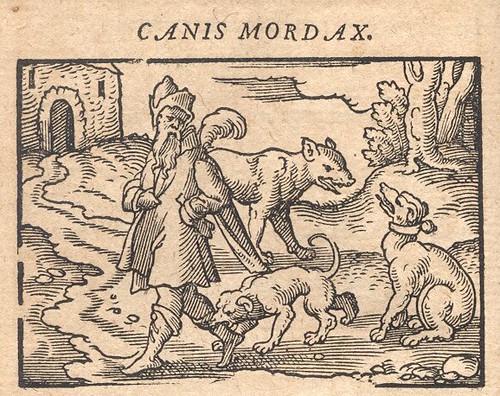
MILLE FABULAE WIDGET: The fable from the Mille Fabulae et Una widget is Canis Mordax, the story of a dog who was both vicious and foolish: Cani, saepius homines mordenti, illigavit dominus nolam, scilicet ut sibi quisque caveret. Canis, ratus virtuti suae tributum hoc decus esse, populares omnes despicit. Accedit tandem ad hunc canem aliquis, iam aetate et auctoritate gravis, monens eum ne erret. “Nam ista nola,” inquit, “data est tibi in dedecus, non in decus.”

Canis Mordax  - Osius

Thursday, April 5, 2012

Round-Up: April 5

Here is a round-up of today's blog posts - and for previous posts, check out the Bestiaria Latina Blog archives. I'm using Google+ a lot these days - highly recommended as a thought-provoking place to hang out online!

HODIE: Nonae Apriles, the Nones of April.

GOOGLE BOOKS: Today's Google Books are Vallambert's Epigrammaton somnia and Hoffmann's Poeticum cum Musis Colludium.

MYTHS and LEGENDS: The art image for today's legend shows Heracles and Cacus; you can also see the legends for the current week listed together here.


TODAY'S DISTICHS and EMBLEMS: All the distichs come with vocabulary lists!

RHYMING DISTICHS: The two new Rhyming Distichs are Quod sibi quisque, Quod sibi quisque serit praesentis tempore vitae, / Hoc sibi messis erit dum dicitur: Ite, venite!; and Si sanctos sequeris, Si sanctos sequeris, sanctus sic efficieris, / Sed perverteris, si perversos comiteris.

CATO'S DISTICHS: The two new Cato Distichs are Cum fueris locuples, Cum fueris locuples, corpus curare memento: / Aeger dives habet nummos, se non habet ipsum; and Dilige te ornari, Dilige te ornari, sed parce dilige formam, / Quam nemo sanctus nec honestus captat habere.

MARTIAL'S DISTICHS: The two new Martial Distichs are Abscisa servum, Abscisā servum quid figis, Pontice, linguā? / Nescis tu populum, quod tacet ille, loqui? and Pistor dulciarius, Mille tibi dulces operum manus ista figuras / Extruet: huic uni parca laborat apis.

VERINUS DISTICHS: The two new distichs by Verinus are Paupertas Bona, Sobria paupertas multorum causa bonorum est; / Hanc tamen ut pestem plurima turba fugit; and Verus Amicus, Temporibus duris veri noscuntur amici; / Ah, fidos paucos experiere tibi.

OWEN'S DISTICHS: The two new Owen epigrams, with Harvey's English versions, are Homicidium, Unus homo per se ipse potest occidere mille; / Unum hominem possunt vix generare duo; and Democritus et Heraclitus, Ille nihil nisi risit, et iste nihil nisi flevit; / Istene ridendus, flendus an ille magis?

ROLLENHAGEN'S EMBLEMS: The two new emblems are Spes Alit Agricolas, Spes alit agricolas messis Dea certa futurae, / illa iubet fidae credere semen humo; and Recto Cursu, Culmen ad Aonidum recto contendere cursu / Fert animus Pindi saxa per et tribulos..

CAMERARIUS'S EMBLEMS: The two new emblems are Propriis Non Parcit Alumnis, Lucius in proprium ut sua viscera congerit alvum, / Sic ipsi sese conficiunt homines; and Terror et Error, Fraudem fraude, astum non fallere dedecet astu, / Saepe timore timor truditur, arte dolus. To illustrate that poem, Camerarius uses the famous incident of Hannibal and the cattle with their horns set ablaze:


TODAY'S MOTTOES and PROVERBS:

3-WORD MOTTOES: Today's 3-word motto is Fruere tua fortuna (English: Enjoy your good luck).

3-WORD PROVERBS: Today's 3-word proverb is Omnia vincit amor (English: Love conquers all).

RHYMING PROVERBS: Today's proverb with rhyme is: Simia quicquid agit, simia semper erit (English: Whatever a monkey does, a monkey she'll always be).

VULGATE VERSES: Today's verse is Beati qui esuriunt et sitiunt iustitiam, quoniam ipsi saturabuntur (Matt. 5:6). For a translation, check out the polyglot Bible, in English, Hebrew, Latin and Greek, at the Sacred Texts Archive online.

ELIZABETHAN PROVERBS: Here is today's proverb commentary, this time by Taverner: Dulcia non meruit, qui non gustavit amara: That is to say, he hath not deserved the swete, whiche hath not taste the sowre. Also an other Proverbe saith, The catte woulde fishe eate, but she will not her feets weate.

TODAY'S FABLES and STORIES:

ANECDOTE OF THE DAY: Today's anecdote is Tulli Mors, the story of the death of Tullus Hostilius, third king of Rome.

FABULAE FACILES WIDGET: The fable from the Fabulae Faciles widget is Culex et Taurus, the story of the bull who foolishly agreed to fight a gnat (this fable has a vocabulary list).

MILLE FABULAE: The "chunk" of Mille Fabulae et Una today is Fable 681, Muscae et Mel, through Fable 690, Scarabaeus, Lepus, et Aquila, including Musca et Vir Haereticus , the wonderful story of a fly and the glory of God's creation.

AESOP IN ENGLISH VERSE: Today's fable from the English verse widget is The Ox and the Ass, the story of a self-important donkey and the self-respecting ox.

MILLE FABULAE WIDGET: The fable from the Mille Fabulae et Una widget is Ursa et Vulpes, the story of a fox and a hypocritical bear: Ursa olim se magnifice iactabat quod prae ceteris animalibus amica hominis esset; eam enim ferunt humanis cadaveribus vesci non solere. Risit vulpes, his auditis, atque ad eam dixit, “O utinam mortuos, non vivos devorares!”

Ursus Superbus et Vulpes

Tuesday, April 3, 2012

Round-Up: April 3

Here is a round-up of today's blog posts - and for previous posts, check out the Bestiaria Latina Blog archives. There are notices also at Twitter - look for Aesopus and AesopusEnglish.

HODIE: ante diem tertium Nonas Apriles.

GOOGLE BOOKS: Today's Google Books are Pulleyn's Church-yard Gleanings and Erich's Epigrammata .

MYTHS and LEGENDS: The art image for today's legend shows Penelope, Laertes and Telemachus; you can also see the legends for the current week listed together here.


TODAY'S DISTICHS and EMBLEMS: All the distichs come with vocabulary lists!

RHYMING DISTICHS: The two new Rhyming Distichs are Blanditiae poterunt, Blanditiae poterunt mentes revocare bonorum, / Sed per supplicium mens est revocanda malorum; and Plus valet in dextra, Plus valet in dextra munus quam plurima extra; / Diligo plus "cape," bis quam si dicatur "habebis."

CATO'S DISTICHS: The two new Cato Distichs are Dilige te ornari, Dilige te ornari, sed parce dilige formam, / Quam nemo sanctus nec honestus captat habere; and Cum sis incautus, Cum sis incautus nec rem ratione gubernes, / Noli Fortunam, quae non est, dicere caecam.

MARTIAL'S DISTICHS: The two new Martial Distichs are Abscisa servum, Abscisā servum quid figis, Pontice, linguā? / Nescis tu populum, quod tacet ille, loqui? and Pistor dulciarius, Mille tibi dulces operum manus ista figuras / Extruet: huic uni parca laborat apis.

VERINUS DISTICHS: The two new distichs by Verinus are Signum Ruinae, Urbes, regna, domos, iuvenum quas rexerit ardor, / Sint quamquam fortes, certa ruina manet; and Optima Quaeque Carpenda, Vergilius gemmas Enni de stercore legit: / Et mihi sunt vatum plura notanda luto.

OWEN'S DISTICHS: The two new Owen epigrams, with Harvey's English versions, are Ad Creditorem, Est tibi, qui debet, servus, qui solvit, amicus. / Debita qui non vult solvere quid? Dominus; and Ad Samuel Daniel, Poetam, Cur calamum tractas dextra, gladiumque sinistra? / Est tibi Mars laevus, dexter Apollo tuus.

CAMERARIUS'S EMBLEMS: The two new emblems are Aspiret Mollior Aura, Dulcisonum mollis Zephyrus demulcet olorem, / Et vatum extimulat pectora dulcis honos; and Invidia Integritatis Assecla, Quantum palma hydri possunt ranaeque nocere, / Tantumdem invidiae virus obesse probis.

ROLLENHAGEN'S EMBLEMS: The two new emblems are Solum A Sole, Cum solum a sole fecundum, ager omnis ab illo / Fertilis, et frugum munere feta Ceres; and Viribus Iungenda Sapientia, Viribus est iungenda modis sapientia cunctis; / uti qui nescit robore, saepe cadit.


TODAY'S MOTTOES and PROVERBS:

TINY PROVERBS: Today's tiny proverb is: Horae volant (English: The hours are flying by).

3-WORD MOTTOES: Today's 3-word verb-less motto is Virtute et robore (English: With excellence and unshakable strength - a motto that could go well with our centaur above).

ANIMAL PROVERBS: Today's animal proverb is Spes laqueo volucres, spes captat arundine pisces (English: Hope captures birds with a net, and fish with a rod - I'll let you figure out just what snare Hope prepares for you!).

POLYDORUS: Today's proverb from Polydorus is: Ad Calendas Graecas (English: On the Greek Calends - which is to say: never, as the Calendars are a feature of the Roman calendar, not Greek).

PROPER NAME PROVERBS: Today's proper name proverb from Erasmus is Evitata Charybdi in Scyllam incidi (English: Having avoided Charybdis, I've fallen into Scylla; from Adagia 1.5.4).

GREEK PROVERBS: Today's proverb is Ἰχθὺν νήχεσθαι διδάσκεις (English: You're teaching a fish to swim - a fool's errand, of course, since the fish already know how to swim, better than you do, in fact!).

TODAY'S FABLES and STORIES:

ANECDOTE OF THE DAY: Today's anecdote is Romuli Mors, the story of the disappearance of Romulus, founder of Rome .

FABULAE FACILES WIDGET: The fable from the Fabulae Faciles widget is Minerva et Olea, the story of the gods and their favorite trees (this fable has a vocabulary list).

MILLE FABULAE WIDGET: The fable from the Mille Fabulae et Una widget is Vulpes et Uva, the famous story of the sour grapes.

AESOP IN ENGLISH VERSE: Today's fable from the English verse widget is The Oak and The Reed, a poem in praise of flexibility.

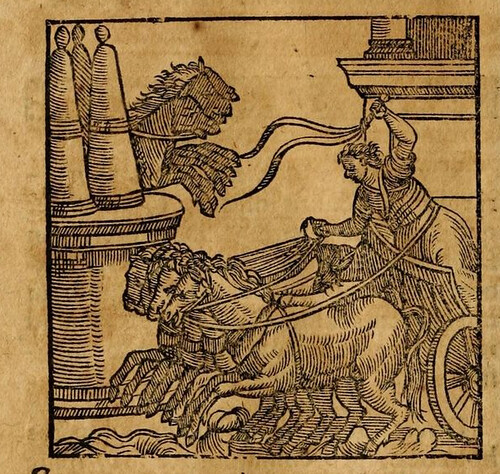
MILLE FABULAE: The "chunk" of Mille Fabulae et Una today is Fable 671, Apes et Vipera, through Fable 680, Musca et Quadrigae, the story of a boastful fly: Quadrigae in stadio currebant, quibus musca insidebat. Maximo autem pulvere, tum equorum pedum pulsu, tum rotarum volutatione, exorto, dicebat musca, “Quam magnam vim pulveris excitavi!”

Musca et Quadrigae

Sunday, April 1, 2012

Round-Up: April 1

Here is a round-up of today's blog posts - and for previous posts, check out the Bestiaria Latina Blog archives. You can keep up with the latest posts by using the RSS feed, or you might prefer to subscribe by email.

HODIE: Kalendae Apriles, the Calends of April!

GOOGLE BOOKS: Today's Google Books are Girard's Stichostratia and Kochanowski's Dzieła wszystkie (this volume contains his Latin works).

MYTHS and LEGENDS: The art image for today's legend shows Nessus and Deianeira; you can also see the legends for the current week listed together here.


TODAY'S DISTICHS and EMBLEMS: All the distichs come with vocabulary lists!

RHYMING DISTICHS: The two new Rhyming Distichs are Cum soleant homini, Cum soleant homini feliciter omnia verti, / Maiori gravitate solent adversa reverti; and Vive Deo gratus, Vive Deo gratus, toti mundo tumulatus, / Pectore pacatus, semper transire paratus.

CATO'S DISTICHS: The two new Cato Distichs are Commoda naturae, Commoda naturae nullo tibi tempore derunt, / Si contentus eo fueris quod postulat usus; and Despice divitias, Despice divitias, si vis animo esse beatus; / Quas qui suspiciunt, mendicant semper avari.

MARTIAL'S DISTICHS: The two new Martial Distichs are Hostem cum fugeret, Hostem cum fugeret, se Fannius ipse peremit; / Hic, rogo, non furor est, ne moriare, mori? and Exigis ut nostros, Exigis ut nostros donem tibi, Tucca, libellos; / Non faciam: nam vis vendere, non legere.

VERINUS DISTICHS: The two new distichs by Verinus are Illa Patria est Felix, Illa domus felix, ubi parvo assueta iuventus; / In festo coctum luxuriatur olus; and Quomodo Dives Efficitur, Vis fieri dives? Christi praecepta sequaris; / Diminuas animi grandia vota tui.

OWEN'S DISTICHS: The two new Owen epigrams, with Harvey's English versions, are Adami Lapsus, Theilologis animam subiecit lapsus Adami, / Et corpus medicis, et bona iuridicis; and Corpus Terrae, Telluris lapides sunt ossa, metallaque nervi, / Pellis crusta, pili gramina, sanguis aqua.

ROLLENHAGEN'S EMBLEMS: The two new emblems are In Virtute Et Fortuna, In Virtute meam Fortunam colloco; vincam / Hac ratione nigram fortiter invidiam; and Suum Cuique Tribue, Cuique suum tribuat, poenas vel praemia, iudex, / lance pari ac aequis omnia ponderibus.

CAMERARIUS'S EMBLEMS: The two new emblems are Erit Altera Merces, Vincere pro patria, vel pulchra occumbere morte / Fortis amat: ramus quod monet iste duplex; and In Utrumque Paratus, Ferre iugum, iugulumque dare, est bos aptus utrinque, / Sic pia turba facit, grata Deo referens. Here you can see the ox, good for both the plow and the altar:


TODAY'S MOTTOES and PROVERBS:

TINY MOTTOES: Today's tiny motto is: Semper sursum (English: Always upwards).

3-WORD PROVERBS: Today's 3-word verb-less proverb is Malleus sapientior manubrio (English: The hammer is wiser than the handle)

AUDIO PROVERBS: Today's audio Latin proverb is Si satis est, multum est (English: If it is enough, it is a great deal). To read a brief essay about this proverb and to listen to the audio, visit the Latin Via Proverbs blog.

PUBLILIUS SYRUS: Today's proverb from Publilius Syrus is: Semper consilium tunc deest, cum opus est maxime (English: There is always a lack of good advice when it is most needed).

ERASMUS' ANIMALS: Today's animal proverb from Erasmus is Ut canis e Nilo (English: Like a dog drinking from the Nile; from Adagia 1.9.80 - an allusion to the famous Aesop's fable about the dog and the crocodile).

TODAY'S FABLES and STORIES:

ANECDOTE OF THE DAY: Today's anecdote is Tarpeia, the story of one of Rome's most famous traitors.

FABULAE FACILES WIDGET: The fable from the Fabulae Faciles widget is Simia et Piscatores, the story of a monkey who wanted to be a fisherman (this fable has a vocabulary list).

MILLE FABULAE WIDGET: The fable from the Mille Fabulae et Una widget is Harundo et Quercus, a story about being flexible.

AESOP IN ENGLISH VERSE: Today's fable from the English verse widget is The Mouse that Fell into the Pot, a story about a mouse's last meal.

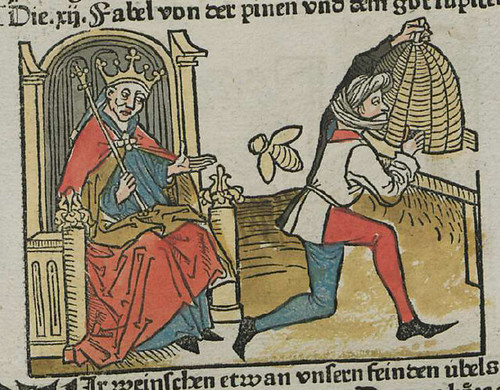
MILLE FABULAE: The "chunk" of Mille Fabulae et Una today is Fable 661, Scorpio et Iuvenis, through Fable 670, Apes et Iuppiter, the story of how the bees got their sting: Quod suos labores ab hominibus compilari apicula aegre ferret, elegantissime constructos favos Iovi obtulit et ab illo petiit letiferam ut aculeo suo vim adderet. Iuppiter, immanitate bestiolae offensus, “Immo potius vitalem vim tribuam,” inquit, “ut una cum illo tibi vita relinquenda sit.”

apes et Iuppiter