Here is a round-up of today's blog posts - and for previous posts, check out the Bestiaria Latina Blog archives. You can keep up with the latest posts by using the RSS feed, or you might prefer to subscribe by email.
HODIE: pridie Idus Novembres.
OWEN'S EPIGRAMS: The two new Owen epigrams, with Harvey's English versions, are Apologia Fortunae and Amicitia.
ANECDOTE OF THE DAY: Today's anecdote is Litterae Occultae, the fabulous story of Histiaeus and ancient cryptography.
VERBUM WIDGET: The word from the daily widget is TALIS - which also has a brief essay at the Verbosum blog. Here's one of the sayings you can find in that essay: Talia dicentur tibi, qualia dixeris ipse, "What things you yourself say, such things will be said to you" (the karma of conversation!).
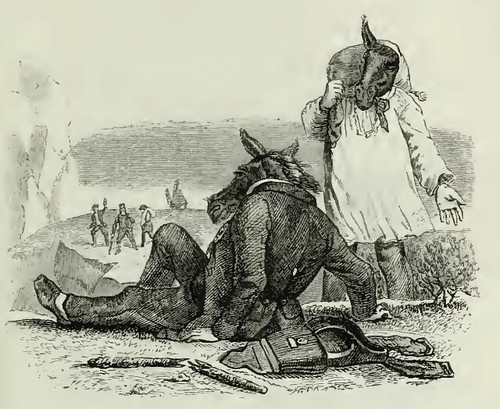
FABULAE FACILES: The NEW easy-to-read fable is Asinus et Vitulus, a story about a terrified calf and a cynical donkey.
FABULAE FACILES WIDGET: The fable from the Fabulae Faciles widget is Feles, Mus, et Caseus, a fable about unintended consequences.
MILLE FABULAE: The "chunk" of Mille Fabulae et Una today is Fable 31 through Fable 40, including Vulpes et Luna, a funny story about the fox who as fooled by the moon's reflection.
NEW MILLE FABULAE: The NEW fables with images are Rusticus et Sepes, a story about a farmer who scorned the hedge and later regretted it, and Rusticus et Vox Haedi, a fable that mocks the legal profession.
MILLE FABULAE WIDGET: The fable from the Mille Fabulae et Una widget is Pulex et Pediculus, the sad story of a louse who got in trouble because of a flea.
GOOGLE BOOKS: Today's Google Books are Gruterus' Florilegium Ethico-Politicum and Aesop's Fables for the Instruction and Improvement of Youth.
TODAY'S MOTTOES & PROVERBS: Widgets available at Schoolhouse Widgets.
Tiny Mottoes: Today's tiny motto is: Vigilo (English: I am watchful).
3-Word Proverbs Verb-less: Today's 3-word verb-less proverb is Omnium artifex sapientia (English: Wisdom is the maker of all things)
Audio Latin Proverb: Today's audio Latin proverb is Nemo ante mortem beatus (English: No one [can be called] happy before his death). To read a brief essay about this proverb and to listen to the audio, visit the Latin Via Proverbs blog.
Maxims of Publilius Syrus: Today's proverb from Publilius Syrus is: Ad paenitendum properat, cito qui iudicat (English: Someone who is quick to judge will soon regret it).
Animal Proverb from Erasmus: Today's animal proverb from Erasmus is Capra nondum peperit, haedus autem ludit in tectis (English: The goat hasn't given birth yet, but the kid is already playing on the rooftops - kind of "counting your chickens before they hatch," but with goats instead; from Adagia 2.6.10).
For an image today, here is that cynical donkey: 225. Asinus et Vitulus. Asinus et vitulus, in eodem pascentes prato, sonitu campanae hostilem exercitum adventare praesenserant. Tum vitulus “Fugiamus hinc, O sodalis,” inquit, “ne hostes nos captivos abducant.” Cui asinus “Fuge tu,” inquit, “quem hostes occidere et esse consueverunt. Asini nihil interest, cui ubique eadem ferendi oneris est proposita conditio.” (source - easy version)
Saturday, November 12, 2011
Thursday, November 10, 2011
Round-Up: November 10
Here is a round-up of today's blog posts - and for previous posts, check out the Bestiaria Latina Blog archives. I'm using Google+ a lot these days - are there any of you I should look for there?
HODIE: ante diem quartum Idus Novembres.
OWEN'S EPIGRAMS: The two new Owen epigrams, with Harvey's English versions, are Amator and Agrorum Stercoratio.
ANECDOTE OF THE DAY: Today's anecdote is Milo Crotonensis, the famous story of Milo the strong-man.
VERBUM WIDGET: The word from the daily widget is REDDO - which also has a brief essay at the Verbosum blog. Here's one of the sayings you can find in that essay: Nulli malum pro malo reddete, "To no one return evil for evil."
FABULAE FACILES: The NEW easy-to-read fable is Mus in Cista Natus, a fantastic fable about "thinking outside the box."
FABULAE FACILES WIDGET: The fable from the Fabulae Faciles widget is Ollae Duae, the famous story of the two pots, one metal and one clay, and their misbegotten friendship.
MILLE FABULAE: The "chunk" of Mille Fabulae et Una today is Fable 21 through Fable 30, including Leo Senex et Vulpes, the famous story of the lion, the fox, and the footprints leading into the cave... but not leading out.
NEW MILLE FABULAE: The NEW fables with images are Rusticus et Dominus Eius, a funny little dispute between a witty farmer and his lord, and Minerva et Hercules, a fable in which the goddess of wisdom teaches Hercules a lesson.
MILLE FABULAE WIDGET: The fable from the Mille Fabulae et Una widget is Catus et Gallus, a cat who has no lack of reasons for killing the rooster.
GOOGLE BOOKS: Today's Google Books are Adagia, collectio absolutissima and Suringar's Glossarium.
TODAY'S MOTTOES & PROVERBS: Widgets available at Schoolhouse Widgets.
3-Word Mottoes: Today's 3-word motto is Aequo pede propera (English: Hurry at an even pace).
3-Word Proverbs: Today's 3-word proverb is Morsus morsum ducit (English: One bite leads to another).
Rhyming Proverbs: Today's proverb with rhyme is: Nulla valet vita, nisi sit virtute polita (English: No life is worthwhile unless it is polished by virtue).
Vulgate Verse: Today's verse is Ne mittatis margaritas vestras ante porcos (Matt. 7:6). For a translation, check out the polyglot Bible, in English, Hebrew, Latin and Greek, at the Sacred Texts Archive online.
Elizabethan Proverb Commentary: Here is today's proverb commentary, this time by Conybeare: Fortes fortuna iuvat: Fortune favoureth bolde adventurers, nothinge venture, nothing have: spare to speake, spare to spede.
Today's image is for the wonderful story of the mouse who falls out of the box, and thus learns to think outside his box! 200. Mus in Cista Natus. Mus, in cista natus, omnem fere ibi duxerat aetatem, nucibus pastus quae in ea servari solebant. Dum autem circa oras cistae ludens decidisset quaereretque ascensum, reperit epulas lautissime paratas, quas cum gustare coepisset, “Quam stultus,” inquit, “hactenus fui, qui toto in terrarum orbe nihil melius cistula mea esse credebam. Ecce quam suavioribus hic vescor cibis.” (source - easy version)
HODIE: ante diem quartum Idus Novembres.
OWEN'S EPIGRAMS: The two new Owen epigrams, with Harvey's English versions, are Amator and Agrorum Stercoratio.
ANECDOTE OF THE DAY: Today's anecdote is Milo Crotonensis, the famous story of Milo the strong-man.
VERBUM WIDGET: The word from the daily widget is REDDO - which also has a brief essay at the Verbosum blog. Here's one of the sayings you can find in that essay: Nulli malum pro malo reddete, "To no one return evil for evil."
FABULAE FACILES: The NEW easy-to-read fable is Mus in Cista Natus, a fantastic fable about "thinking outside the box."
FABULAE FACILES WIDGET: The fable from the Fabulae Faciles widget is Ollae Duae, the famous story of the two pots, one metal and one clay, and their misbegotten friendship.
MILLE FABULAE: The "chunk" of Mille Fabulae et Una today is Fable 21 through Fable 30, including Leo Senex et Vulpes, the famous story of the lion, the fox, and the footprints leading into the cave... but not leading out.
NEW MILLE FABULAE: The NEW fables with images are Rusticus et Dominus Eius, a funny little dispute between a witty farmer and his lord, and Minerva et Hercules, a fable in which the goddess of wisdom teaches Hercules a lesson.
MILLE FABULAE WIDGET: The fable from the Mille Fabulae et Una widget is Catus et Gallus, a cat who has no lack of reasons for killing the rooster.
GOOGLE BOOKS: Today's Google Books are Adagia, collectio absolutissima and Suringar's Glossarium.
TODAY'S MOTTOES & PROVERBS: Widgets available at Schoolhouse Widgets.
3-Word Mottoes: Today's 3-word motto is Aequo pede propera (English: Hurry at an even pace).
3-Word Proverbs: Today's 3-word proverb is Morsus morsum ducit (English: One bite leads to another).
Rhyming Proverbs: Today's proverb with rhyme is: Nulla valet vita, nisi sit virtute polita (English: No life is worthwhile unless it is polished by virtue).
Vulgate Verse: Today's verse is Ne mittatis margaritas vestras ante porcos (Matt. 7:6). For a translation, check out the polyglot Bible, in English, Hebrew, Latin and Greek, at the Sacred Texts Archive online.
Elizabethan Proverb Commentary: Here is today's proverb commentary, this time by Conybeare: Fortes fortuna iuvat: Fortune favoureth bolde adventurers, nothinge venture, nothing have: spare to speake, spare to spede.
Today's image is for the wonderful story of the mouse who falls out of the box, and thus learns to think outside his box! 200. Mus in Cista Natus. Mus, in cista natus, omnem fere ibi duxerat aetatem, nucibus pastus quae in ea servari solebant. Dum autem circa oras cistae ludens decidisset quaereretque ascensum, reperit epulas lautissime paratas, quas cum gustare coepisset, “Quam stultus,” inquit, “hactenus fui, qui toto in terrarum orbe nihil melius cistula mea esse credebam. Ecce quam suavioribus hic vescor cibis.” (source - easy version)
Tuesday, November 8, 2011
Round-Up: November 8
Here is a round-up of today's blog posts - and for previous posts, check out the Bestiaria Latina Blog archives. There are notices also at Twitter - look for Aesopus and AesopusEnglish.
HODIE: ante diem sextum Idus Novembres.
ANECDOTE OF THE DAY: Today's anecdote is Mausolus, the story of Mausolus and the first mausoleum!
OWEN'S EPIGRAMS: The new Owen epigrams, with Harvey's English versions, are Aesopi Lingua and Aequinamitas.
SCALA SAPIENTIAE: Today you can find sayings that go up to Diederich frequency ranking 172 - so the proverbs contain nothing but words found among the 172 most commonly used words in Latin. Here is one of the items in today's list: O tempora, O mores!, "O the times, O the customs!" - you can read more about Cicero's exclamation in Wikipedia.
VERBUM WIDGET: The word from the daily widget is UT - which also has a brief essay at the Verbosum blog. Here's one of the sayings you can find in that essay: Doce, ut discas, "Teach in order to learn."
FABULAE FACILES: The NEW easy-to-read fable is Sol et Stellae, a fable about how brilliance is all relative.
FABULAE FACILES WIDGET: The fable from the Fabulae Faciles widget is Pavo Deplumatus , the sad story of a generous but reckless peacock.
MILLE FABULAE: The "chunk" of Mille Fabulae et Una today is Fable 11 through Fable 20, including Leo Amatorius et Silvanus, the sad story of the lion who fell in love with the daughter of a woodsman and Leo et Pastor, the famous story of Androcles and the lion, although with an anonymous shepherd.
NEW MILLE FABULAE: The NEW fables with images are Iuppiter et Hominum Peccata, a story about why the justice is sometimes slow in coming, and Vomeres Duo, a fable about the virtues of staying active!
MILLE FABULAE WIDGET: The fable from the Mille Fabulae et Una widget is Muli et Latrones, a a kind of OWS fable - where the Wall Street mule ends up the big loser.
GOOGLE BOOKS: Today's Google Books are Sartorius-Schrevelius' Adagiorum chiliades tres and Apostolius' Proverbia Graeco-Latina .
TODAY'S MOTTOES & PROVERBS: Widgets available at Schoolhouse Widgets.
Tiny Proverbs: Today's tiny proverb is: Contemne contemni (English: Scorn to be scorned).
3-Word Mottoes Verb-less: Today's 3-word verb-less motto is Ne quid nimis (English: Not anything in excess).
Latin Animal Proverb: Today's animal proverb is Ex verbis fatuos, ex aure tenemus asellos (English: We grasp donkeys by the ear, and fools by their words).
Proverbs of Polydorus: Today's proverb from Polydorus is: Homo ad laborem nascitur (English: Man is born to labor).
Proper Name Proverb from Erasmus: Today's proper name proverb from Erasmus is Sine Cerere et Baccho friget Venus (English: Without Ceres and Bacchus, Venus grows cold - which is to say, without bread and wine, love grows cold; from Adagia 2.3.97).
Greek Proverb of the Day: Today's proverb is Μὴ παντὶ ἐμβάλλειν δεξιάν (English: Don't reach out your right hand to just anybody).
For an image today, here are those two mules - and you can find an English version of this fable over at my new Aesop page at Google+ too! 252. Muli et Latrones. Ibant muli duo sarcinis onusti. Alter fiscos cum pecunia, alter saccos hordei ferebat. Ille, cum onere superbiret, celsam cervicem iactat et clarum tintinnabulum in collo gerit. Comes placido gradu sequitur. Subito latrones ex insidiis advolant et mulum, qui argentum ferebat, ferro vulnerant, homines fugant, nummosque diripiunt. Alterius muli hordeum neglectum est. Cum igitur ille spoliatus et vulneratus casum suum defleret, “Equidem,” inquit alter, “gaudeo, quod contemptus sum. Ego nihil amisi neque vulnere laesus sum.” (source)
HODIE: ante diem sextum Idus Novembres.
ANECDOTE OF THE DAY: Today's anecdote is Mausolus, the story of Mausolus and the first mausoleum!
OWEN'S EPIGRAMS: The new Owen epigrams, with Harvey's English versions, are Aesopi Lingua and Aequinamitas.
SCALA SAPIENTIAE: Today you can find sayings that go up to Diederich frequency ranking 172 - so the proverbs contain nothing but words found among the 172 most commonly used words in Latin. Here is one of the items in today's list: O tempora, O mores!, "O the times, O the customs!" - you can read more about Cicero's exclamation in Wikipedia.
VERBUM WIDGET: The word from the daily widget is UT - which also has a brief essay at the Verbosum blog. Here's one of the sayings you can find in that essay: Doce, ut discas, "Teach in order to learn."
FABULAE FACILES: The NEW easy-to-read fable is Sol et Stellae, a fable about how brilliance is all relative.
FABULAE FACILES WIDGET: The fable from the Fabulae Faciles widget is Pavo Deplumatus , the sad story of a generous but reckless peacock.
MILLE FABULAE: The "chunk" of Mille Fabulae et Una today is Fable 11 through Fable 20, including Leo Amatorius et Silvanus, the sad story of the lion who fell in love with the daughter of a woodsman and Leo et Pastor, the famous story of Androcles and the lion, although with an anonymous shepherd.
NEW MILLE FABULAE: The NEW fables with images are Iuppiter et Hominum Peccata, a story about why the justice is sometimes slow in coming, and Vomeres Duo, a fable about the virtues of staying active!
MILLE FABULAE WIDGET: The fable from the Mille Fabulae et Una widget is Muli et Latrones, a a kind of OWS fable - where the Wall Street mule ends up the big loser.
GOOGLE BOOKS: Today's Google Books are Sartorius-Schrevelius' Adagiorum chiliades tres and Apostolius' Proverbia Graeco-Latina .
TODAY'S MOTTOES & PROVERBS: Widgets available at Schoolhouse Widgets.
Tiny Proverbs: Today's tiny proverb is: Contemne contemni (English: Scorn to be scorned).
3-Word Mottoes Verb-less: Today's 3-word verb-less motto is Ne quid nimis (English: Not anything in excess).
Latin Animal Proverb: Today's animal proverb is Ex verbis fatuos, ex aure tenemus asellos (English: We grasp donkeys by the ear, and fools by their words).
Proverbs of Polydorus: Today's proverb from Polydorus is: Homo ad laborem nascitur (English: Man is born to labor).
Proper Name Proverb from Erasmus: Today's proper name proverb from Erasmus is Sine Cerere et Baccho friget Venus (English: Without Ceres and Bacchus, Venus grows cold - which is to say, without bread and wine, love grows cold; from Adagia 2.3.97).
Greek Proverb of the Day: Today's proverb is Μὴ παντὶ ἐμβάλλειν δεξιάν (English: Don't reach out your right hand to just anybody).
For an image today, here are those two mules - and you can find an English version of this fable over at my new Aesop page at Google+ too! 252. Muli et Latrones. Ibant muli duo sarcinis onusti. Alter fiscos cum pecunia, alter saccos hordei ferebat. Ille, cum onere superbiret, celsam cervicem iactat et clarum tintinnabulum in collo gerit. Comes placido gradu sequitur. Subito latrones ex insidiis advolant et mulum, qui argentum ferebat, ferro vulnerant, homines fugant, nummosque diripiunt. Alterius muli hordeum neglectum est. Cum igitur ille spoliatus et vulneratus casum suum defleret, “Equidem,” inquit alter, “gaudeo, quod contemptus sum. Ego nihil amisi neque vulnere laesus sum.” (source)
Sunday, November 6, 2011
Round-Up: November 6
Here is a round-up of today's blog posts - and for previous posts, check out the Bestiaria Latina Blog archives. You can keep up with the latest posts by using the RSS feed, or you might prefer to subscribe by email.
HODIE: ante diem octavum Idus Novembres.
OWEN'S EPIGRAMS: The two new Owen epigrams, with Harvey's English versions, are Adverbia Christiana and Adulator et Invidus.
ANECDOTE OF THE DAY: Today's anecdote is Hannibal et Decem Captivi, a thought-provoking anecdote about prisoners of war in the Second Punic War.
SCALA SAPIENTIAE: Today you can find sayings that go up to Diederich frequency ranking 166 - so the proverbs contain nothing but words found among the 166 most commonly used words in Latin. Here is one of the items in today's list: Ne ignem ad ignem, "Don't (add) fire to fire."
VERBUM WIDGET: The word from the daily widget is AMBULO - which also has a brief essay at the Verbosum blog. Here's one of the sayings you can find in that essay: Tu dormis, et tempus ambulat, "You are sleeping, and time is on the move."
FABULAE FACILES: The NEW easy-to-read fable is Vulpes et Uva, the famous fable of the sour grapes.
FABULAE FACILES WIDGET: The fable from the Fabulae Faciles widget is Mors et Pauper, the story of the poor man who thought he wanted to die... but he was wrong about that.
MILLE FABULAE: The "chunk" of Mille Fabulae et Una today is Fable 1 through Fable 10, including Leo et Equus, the story of how the horse outwitted Dr. Lion.
NEW MILLE FABULAE: The NEW fables with images are Columba et Lupus, a story about the mutual insults exchanged between the dove and the wolf, and Columbae Duae, Maritus et Uxor, the sad story of a fatal misunderstanding between Mr. and Mrs. Dove.
MILLE FABULAE WIDGET: The fable from the Mille Fabulae et Una widget is Vulpes et Vermiculus , a "physician, heal thyself" type of fable.
GOOGLE BOOKS: Today's Google Books are Ritz's Florilegium Adagiorum et Sententiarum and Ray's Compleat Collection of English Proverbs.
TODAY'S MOTTOES & PROVERBS: Widgets available at Schoolhouse Widgets.
Tiny Mottoes: Today's tiny motto is: Meliora spero (English: I hope for better things).
3-Word Proverbs Verb-less: Today's 3-word verb-less proverb is Ad Graecas calendas (English: On the Greek calends - which is to say, when hell freezes over!)
Audio Latin Proverb: Today's audio Latin proverb is Qui gladio ferit, gladio perit (English: He who wounds by the sword, dies by the sword). To read a brief essay about this proverb and to listen to the audio, visit the Latin Via Proverbs blog.
Maxims of Publilius Syrus: Today's proverb from Publilius Syrus is: Improbe Neptunum accusat, qui iterum naufragium facit (English: It's dishonest to blame Neptune for the second shipwreck).
Animal Proverb from Erasmus: Today's animal proverb from Erasmus is Asinus portans mysteria (English: The donkey carrying the icons; from Adagia 2.2.4).
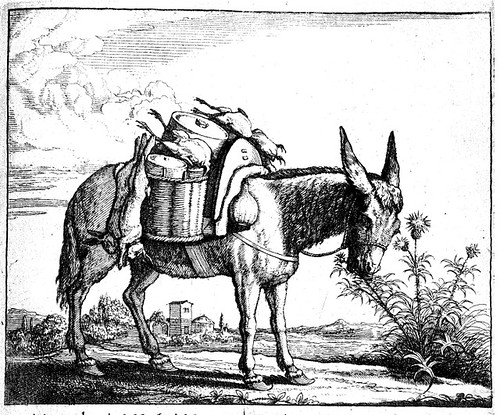
In honor of that Erasmus proverb, here is the fable version: 249. Asinus Res Sacras Portans. Asinus quidam res sacras portabat, ratus sese venerari homines. Itaque erectus incedebat, tamquam sibi tus illud atque carmina acciperet. Cuius errorem cum mox vidit aliquis, “Mi asine,” inquit, “istam vanitatem tibi excute. Non te, sed istas res sacras caerimoniis colunt; isti divo haec religio debetur.” (source)
HODIE: ante diem octavum Idus Novembres.
OWEN'S EPIGRAMS: The two new Owen epigrams, with Harvey's English versions, are Adverbia Christiana and Adulator et Invidus.
ANECDOTE OF THE DAY: Today's anecdote is Hannibal et Decem Captivi, a thought-provoking anecdote about prisoners of war in the Second Punic War.
SCALA SAPIENTIAE: Today you can find sayings that go up to Diederich frequency ranking 166 - so the proverbs contain nothing but words found among the 166 most commonly used words in Latin. Here is one of the items in today's list: Ne ignem ad ignem, "Don't (add) fire to fire."
VERBUM WIDGET: The word from the daily widget is AMBULO - which also has a brief essay at the Verbosum blog. Here's one of the sayings you can find in that essay: Tu dormis, et tempus ambulat, "You are sleeping, and time is on the move."
FABULAE FACILES: The NEW easy-to-read fable is Vulpes et Uva, the famous fable of the sour grapes.
FABULAE FACILES WIDGET: The fable from the Fabulae Faciles widget is Mors et Pauper, the story of the poor man who thought he wanted to die... but he was wrong about that.
MILLE FABULAE: The "chunk" of Mille Fabulae et Una today is Fable 1 through Fable 10, including Leo et Equus, the story of how the horse outwitted Dr. Lion.
NEW MILLE FABULAE: The NEW fables with images are Columba et Lupus, a story about the mutual insults exchanged between the dove and the wolf, and Columbae Duae, Maritus et Uxor, the sad story of a fatal misunderstanding between Mr. and Mrs. Dove.
MILLE FABULAE WIDGET: The fable from the Mille Fabulae et Una widget is Vulpes et Vermiculus , a "physician, heal thyself" type of fable.
GOOGLE BOOKS: Today's Google Books are Ritz's Florilegium Adagiorum et Sententiarum and Ray's Compleat Collection of English Proverbs.
TODAY'S MOTTOES & PROVERBS: Widgets available at Schoolhouse Widgets.
Tiny Mottoes: Today's tiny motto is: Meliora spero (English: I hope for better things).
3-Word Proverbs Verb-less: Today's 3-word verb-less proverb is Ad Graecas calendas (English: On the Greek calends - which is to say, when hell freezes over!)
Audio Latin Proverb: Today's audio Latin proverb is Qui gladio ferit, gladio perit (English: He who wounds by the sword, dies by the sword). To read a brief essay about this proverb and to listen to the audio, visit the Latin Via Proverbs blog.
Maxims of Publilius Syrus: Today's proverb from Publilius Syrus is: Improbe Neptunum accusat, qui iterum naufragium facit (English: It's dishonest to blame Neptune for the second shipwreck).
Animal Proverb from Erasmus: Today's animal proverb from Erasmus is Asinus portans mysteria (English: The donkey carrying the icons; from Adagia 2.2.4).
In honor of that Erasmus proverb, here is the fable version: 249. Asinus Res Sacras Portans. Asinus quidam res sacras portabat, ratus sese venerari homines. Itaque erectus incedebat, tamquam sibi tus illud atque carmina acciperet. Cuius errorem cum mox vidit aliquis, “Mi asine,” inquit, “istam vanitatem tibi excute. Non te, sed istas res sacras caerimoniis colunt; isti divo haec religio debetur.” (source)
Friday, November 4, 2011
Round-Up: November 4
Here is a round-up of today's blog posts - and for previous posts, check out the Bestiaria Latina Blog archives. I'm using Google+ a lot these days - are there any of you I should look for there?
HODIE: pridie Nonas Novembres.
OWEN'S EPIGRAMS: The two new Owen epigrams, with Harvey's English versions, are Ad Zoilum and Ad Philopatrum.
ANECDOTE OF THE DAY: Today's anecdote is Polus Histrio, a great story about "method acting" in the ancient world.
VERBUM WIDGET: The word from the daily widget is CONSILIUM - which also has a brief essay at the Verbosum blog. Here's one of the sayings you can find in that essay: Malum est consilium, quod mutari non potest, "It's a bad plan which cannot be changed."
FABULAE FACILES: The NEW easy-to-read fable is Psittacus Honoratus, a bird's perspective on the liberal arts education!
FABULAE FACILES WIDGET: The fable from the Fabulae Faciles widget is Serpens et Filius Eius, a great story about the "snake-eat-snake" world in which we live.
MILLE FABULAE: ILLUSTRATIONS: The NEW fables with images are Fontes Duo, a story about the rewards for those who don't take the easy way out, and Mare et Fluvii, a story about a quarrel between the salty sea and the rivers flowing into it.
MILLE FABULAE: ILLUSTRATIONS: The fable from the Mille Fabulae et Una widget is Ranae Duae et Puteus, a story about looking before you leap.
GOOGLE BOOKS: Today's Google Books are Sententiae et Proverbia and Marvin's Antiquity of Proverbs.
TODAY'S MOTTOES & PROVERBS: Widgets available at Schoolhouse Widgets.
3-Word Mottoes: Today's 3-word motto is Tolerandum et sperandum (English: We must endure and hope).
3-Word Proverbs: Today's 3-word proverb is Qui audet adipiscitur (English: He who dares gets what he aims at).
Rhyming Proverbs: Today's proverb with rhyme is: Modicus cibi medicus sibi (English: Be your own doctor: limit your food!).
Vulgate Verse: Today's verse is Qui tetigerit picem, inquinabitur ab illa (Sirach 13:1). For a translation, check out the polyglot Bible, in English, Hebrew, Latin and Greek, at the Sacred Texts Archive online.
Elizabethan Proverb Commentary: Here is today's proverb commentary, this time by Taverner: Saepe etiam stultus fuit opportuna locutus: Oftentimes even the foole hitteth the nayle on the head, and speaketh thinges in place. This Proverbe admonisheth us, not to reiecte ne despise an holsome and right sentence, spoken otherwhiles oute of a rude felowes mouth.
Today's image is for the story of the snake who would be a dragon: 615. Serpens et Filius Eius. Serpens filium monebat ut sibi adesset dum in alium serpentem rueret ac mordicus corriperet et glutiret. “Facinus tam nefarium, pater,” inquit, “tune ut perpetres? De gente nostra is unus est.” “Tace, inepte, tace; sic agere expedit. Serpens enim, si serpentem non devoret, draco non fit.” Fabula ad hos potentes pertinet, qui crescere solent ex alienis cladibus. (source - easy version)
HODIE: pridie Nonas Novembres.
OWEN'S EPIGRAMS: The two new Owen epigrams, with Harvey's English versions, are Ad Zoilum and Ad Philopatrum.
ANECDOTE OF THE DAY: Today's anecdote is Polus Histrio, a great story about "method acting" in the ancient world.
VERBUM WIDGET: The word from the daily widget is CONSILIUM - which also has a brief essay at the Verbosum blog. Here's one of the sayings you can find in that essay: Malum est consilium, quod mutari non potest, "It's a bad plan which cannot be changed."
FABULAE FACILES: The NEW easy-to-read fable is Psittacus Honoratus, a bird's perspective on the liberal arts education!
FABULAE FACILES WIDGET: The fable from the Fabulae Faciles widget is Serpens et Filius Eius, a great story about the "snake-eat-snake" world in which we live.
MILLE FABULAE: ILLUSTRATIONS: The NEW fables with images are Fontes Duo, a story about the rewards for those who don't take the easy way out, and Mare et Fluvii, a story about a quarrel between the salty sea and the rivers flowing into it.
MILLE FABULAE: ILLUSTRATIONS: The fable from the Mille Fabulae et Una widget is Ranae Duae et Puteus, a story about looking before you leap.
GOOGLE BOOKS: Today's Google Books are Sententiae et Proverbia and Marvin's Antiquity of Proverbs.
TODAY'S MOTTOES & PROVERBS: Widgets available at Schoolhouse Widgets.
3-Word Mottoes: Today's 3-word motto is Tolerandum et sperandum (English: We must endure and hope).
3-Word Proverbs: Today's 3-word proverb is Qui audet adipiscitur (English: He who dares gets what he aims at).
Rhyming Proverbs: Today's proverb with rhyme is: Modicus cibi medicus sibi (English: Be your own doctor: limit your food!).
Vulgate Verse: Today's verse is Qui tetigerit picem, inquinabitur ab illa (Sirach 13:1). For a translation, check out the polyglot Bible, in English, Hebrew, Latin and Greek, at the Sacred Texts Archive online.
Elizabethan Proverb Commentary: Here is today's proverb commentary, this time by Taverner: Saepe etiam stultus fuit opportuna locutus: Oftentimes even the foole hitteth the nayle on the head, and speaketh thinges in place. This Proverbe admonisheth us, not to reiecte ne despise an holsome and right sentence, spoken otherwhiles oute of a rude felowes mouth.
Today's image is for the story of the snake who would be a dragon: 615. Serpens et Filius Eius. Serpens filium monebat ut sibi adesset dum in alium serpentem rueret ac mordicus corriperet et glutiret. “Facinus tam nefarium, pater,” inquit, “tune ut perpetres? De gente nostra is unus est.” “Tace, inepte, tace; sic agere expedit. Serpens enim, si serpentem non devoret, draco non fit.” Fabula ad hos potentes pertinet, qui crescere solent ex alienis cladibus. (source - easy version)
Wednesday, November 2, 2011
Round-Up: November 2
Here is a round-up of today's blog posts - and for previous posts, check out the Bestiaria Latina Blog archives. There are notices also at Twitter - look for Aesopus and AesopusEnglish.
HODIE: ante diem quartum Nonas Novembres.
OWEN'S EPIGRAMS: The two new Owen epigrams, with Harvey's English versions, are Ad Parentes and Ad Medicos et Iurisconsultos.
ANECDOTE OF THE DAY: Today's anecdote is Hannibal et Antiochus, where Hannibal in a few words is able to deflate the ambitions of King Antiochus III, the Seleucid king who went to war with the Romans in 192 BCE.
SCALA SAPIENTIAE: Today you can find sayings that go up to Diederich frequency ranking 160 - so the proverbs contain nothing but words found among the 160 most commonly used words in Latin. Here is one of the items in today's list: Vivimus, non ut volumus, sed ut possumus, "We live, not as we want, but as we can."
VERBUM WIDGET: The word from the daily widget is MAIOR - which also has a brief essay at the Verbosum blog. Here's one of the sayings you can find in that essay: Ad maiora nati sumus, "We are born for greater things."
FABULAE FACILES: The NEW easy-to-read fable is Formica Transformata, a wonderful story about why ants act the way that they do!
FABULAE FACILES WIDGET: The fable from the Fabulae Faciles widget is Gladius in Via Iacens, a story about a talking sword!
MILLE FABULAE: ILLUSTRATIONS: The NEW fables with images are Malus et Rusticus, a story about the perils of transplanting a tree, and Musca et Vir Haereticus, a wonderful story about a fly who knows that she, too, is one of God's creatures.
MILLE FABULAE: ILLUSTRATIONS: The fable from the Mille Fabulae et Una widget is Serpens Calcata et Apollo, a story about a snake who needs to learn a lesson in self-defense.
GOOGLE BOOKS: Today's Google Books are Macdonnel's Dictionary of Quotations and Leutsch & Schneidewin's Corpus Paroemiographorum Graecorum .
TODAY'S MOTTOES & PROVERBS: Widgets available at Schoolhouse Widgets.
Tiny Proverbs: Today's tiny proverb is: Diligamus invicem (English: Let us love one another).
3-Word Mottoes Verb-less: Today's 3-word verb-less motto is Honesta quam magna (English: Honorable things, rather than big).
Latin Animal Proverb: Today's animal proverb is Ducito bovem volentem (English: Lead the ox that is willing).
Proverbs of Polydorus: Today's proverb from Polydorus is: Nihil invita Minerva facies (English: You will not accomplish anything if Minerva is unwilling).
Proper Name Proverb from Erasmus: Today's proper name proverb from Erasmus is Deo Fortunaeque committo (English: I put my trust in God and Fortune; from Adagia 3.8.96).
Greek Proverb of the Day: Today's proverb is Βοῦν ἐπὶ γλώττης φέρει (English: He's carrying an ox on his tongue - and the ox referred to there is the ox that appeared on ancient Greek coins; in other words, the man has been bribed to keep silent!).
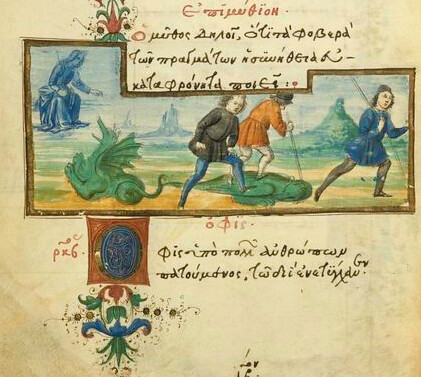
For an image today, here is a fierce-looking snake from the Medici Aesop: 614. Serpens Calcata et Apollo. Serpens, cum humi reperet, multorum pedibus calcata erat. Accessit supplex fanum Apollinis; quam simulatque conspexit Deus, “Si primum statim,” inquit, “qui te calcaret, perdidisses, non ausus fuisset alter.” (source: you have to read the image from right to left; on the right, you see the snake being stepped on, and on the left he appeals to Apollo)
HODIE: ante diem quartum Nonas Novembres.
OWEN'S EPIGRAMS: The two new Owen epigrams, with Harvey's English versions, are Ad Parentes and Ad Medicos et Iurisconsultos.
ANECDOTE OF THE DAY: Today's anecdote is Hannibal et Antiochus, where Hannibal in a few words is able to deflate the ambitions of King Antiochus III, the Seleucid king who went to war with the Romans in 192 BCE.
SCALA SAPIENTIAE: Today you can find sayings that go up to Diederich frequency ranking 160 - so the proverbs contain nothing but words found among the 160 most commonly used words in Latin. Here is one of the items in today's list: Vivimus, non ut volumus, sed ut possumus, "We live, not as we want, but as we can."
VERBUM WIDGET: The word from the daily widget is MAIOR - which also has a brief essay at the Verbosum blog. Here's one of the sayings you can find in that essay: Ad maiora nati sumus, "We are born for greater things."
FABULAE FACILES: The NEW easy-to-read fable is Formica Transformata, a wonderful story about why ants act the way that they do!
FABULAE FACILES WIDGET: The fable from the Fabulae Faciles widget is Gladius in Via Iacens, a story about a talking sword!
MILLE FABULAE: ILLUSTRATIONS: The NEW fables with images are Malus et Rusticus, a story about the perils of transplanting a tree, and Musca et Vir Haereticus, a wonderful story about a fly who knows that she, too, is one of God's creatures.
MILLE FABULAE: ILLUSTRATIONS: The fable from the Mille Fabulae et Una widget is Serpens Calcata et Apollo, a story about a snake who needs to learn a lesson in self-defense.
GOOGLE BOOKS: Today's Google Books are Macdonnel's Dictionary of Quotations and Leutsch & Schneidewin's Corpus Paroemiographorum Graecorum .
TODAY'S MOTTOES & PROVERBS: Widgets available at Schoolhouse Widgets.
Tiny Proverbs: Today's tiny proverb is: Diligamus invicem (English: Let us love one another).
3-Word Mottoes Verb-less: Today's 3-word verb-less motto is Honesta quam magna (English: Honorable things, rather than big).
Latin Animal Proverb: Today's animal proverb is Ducito bovem volentem (English: Lead the ox that is willing).
Proverbs of Polydorus: Today's proverb from Polydorus is: Nihil invita Minerva facies (English: You will not accomplish anything if Minerva is unwilling).
Proper Name Proverb from Erasmus: Today's proper name proverb from Erasmus is Deo Fortunaeque committo (English: I put my trust in God and Fortune; from Adagia 3.8.96).
Greek Proverb of the Day: Today's proverb is Βοῦν ἐπὶ γλώττης φέρει (English: He's carrying an ox on his tongue - and the ox referred to there is the ox that appeared on ancient Greek coins; in other words, the man has been bribed to keep silent!).
For an image today, here is a fierce-looking snake from the Medici Aesop: 614. Serpens Calcata et Apollo. Serpens, cum humi reperet, multorum pedibus calcata erat. Accessit supplex fanum Apollinis; quam simulatque conspexit Deus, “Si primum statim,” inquit, “qui te calcaret, perdidisses, non ausus fuisset alter.” (source: you have to read the image from right to left; on the right, you see the snake being stepped on, and on the left he appeals to Apollo)
Subscribe to:
Posts (Atom)