Wednesday, September 15, 2010

Round-Up: September 15

Here is a round-up of today's blog posts - and for previous posts, check out the Bestiaria Latina Blog archives. You can keep up with the latest posts by using the RSS feed, or you might prefer to subscribe by email. I'm Twittering again now at Aesopus and AesopusEnglish.

HODIE: ante diem septimum decimum Kalendas Octobres (and yes, you can have your own Roman Google Calendar).

VERBUM HODIERNUM: Today's word is INTER - read a brief essay about the word at the Verbosum blog. Here's one of the sayings you can find in the essay: Tantalus inter undas sitit, "Tantalus thirsts amidst the waves."

MILLE FABULAE: New materials at the blog include lots of new illustrated fables - there are about 400 of the illustrated fables now! This is also where you can download your free PDF copy of the Mille Fabulae et Una book.

FABULAE FACILES: The new easy-to-read fable is Simius Rex et Vulpes, about how the monkey was made king of the animals... and then was outsmarted by the fox.

PODCASTS: Today's Latin audio fable is Graculus et Pavones.

ENGLISH AESOP: Today's English fables are from Sir Roger L'Estrange: An Ass and the Frogs, A Stag and a Lyon, A Wolf and a Crane, A Wolf and a Sheep, and A Horse and a Lion.

TODAY'S MOTTOES & PROVERBS: Widgets available at SchoolhouseWidgets.com.

Tiny Proverbs: Today's tiny proverb is: Iracundiam rege (English: Rule your anger).

3-Word Mottoes Verb-less: Today's 3-word verb-less motto is Volens et valens (English: Willing and able - although the Latin sounds much better!).

Latin Animal Proverb: Today's animal proverb is Bos ad aquam tractus non vult potare coactus (English: An ox led to water will not drink under compulsion).

Proverbs of Polydorus: Today's proverb from Polydorus is: Caritas perfecta foras mittit timorem (English: Perfect love drives fear out).

Proper Name Proverb from Erasmus: Today's proper name proverb from Erasmus is Mandrabuli more res succedit (English: The thing is going the way of Mandrabulus; from Adagia 1.2.58 - This refers to things that get steadily worse; a certain Mandrabulus once found a treasure and made an offering of a golden sheep to Juno the first year, a silver offering the next year, and bronze offering the year after that).

Greek Proverb of the Day: Today's proverb is Χαλεπὸν τὸ εὖ γνῶναι (English: To know is hard.).

Today's image is one of the illustrations from the beautiful Medici Aesop, for the story of the crow and the donkey: 435. Corvus Asinum Feriens. Asinus, cuius in dorso ulcus inerat, in prato quodam pascebatur. Corvus autem cum supra ipsum constitisset ac rostro ulcus feriret, asinus prae cruciatu vehementer rudebat atque saltabat. Procul interim stante agasone deque illo ridente, lupus, forte praeteriens, ubi fieri id vidit, “Heu nos miseros,” secum ait, “nos enim homines si tantum viderint, statim persequuntur; hos vero etiam accedentes cum risu libenter excipiunt.” (source)
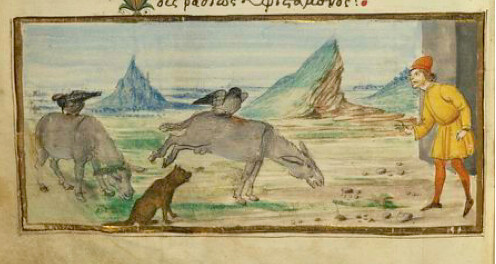
Corvus, Asinus et Lupus

Monday, September 13, 2010

Myths and Legends: Orpheus and the Animals

Orpheus and the Animals. To find out more about Orpheus, the legendary poet and musician, see this Wikipedia article: link; for information about the image: image source.

Orpheus was the great singer and musician of the ancient Greek and Roman worlds; his playing was able to captivate not only humans, but also animals, as you can see in this Roman mosaic; you can compare another mosaic on this same theme here.

You can also find more myths and legends for the week of September 9 - September 15 here. For more information and links to the actual javascript code, see the Myths & Legends Widget Reference Page.

Round-Up: September 13

Here is a round-up of today's blog posts - and for previous posts, check out the Bestiaria Latina Blog archives. You can keep up with the latest posts by using the RSS feed, or you might prefer to subscribe by email. I'm Twittering again now at Aesopus and AesopusEnglish.

HODIE: Idus Septembres, the "Ides of September" (and yes, you can have your own Roman Google Calendar).

VERBUM HODIERNUM: Today's word is that tiny little verb AIO - read a brief essay about the word at the Verbosum blog. Here's one of the sayings you can find in the essay: Aut ai aut nega, "Say either 'yea' or 'nay'"

MILLE FABULAE: New materials at the blog include lots more illustrated fables (I'm trying to do five every day). This is also where you can download your free PDF copy of the Mille Fabulae et Una book.

FABULAE FACILES: The new easy-to-read fable is Ovis, Cervus, et Lupus, the story of the sneaky stag and the wise sheep.

PODCASTS: Today's Latin audio fable is Mures Felem Contemplantes , a fable warning the mice to watch out!

ENGLISH AESOP: Today's English fables are by Sir Roger L'Estrange: Countryman and Snake, Wolf and Kid, Wild Ass and Tame, Raven and Swan, and The Crow and the Muscle (we would say "mussel").

TODAY'S MOTTOES & PROVERBS: Widgets available at SchoolhouseWidgets.com.

Tiny Mottoes: Today's tiny motto is: Vigilando ascendimus (English: By being watchful, we rise).

3-Word Proverbs Verb-less: Today's 3-word verb-less proverb is Omnia somnia mendacia (English: All dreams are deceptive)

Audio Latin Proverb: Today's audio Latin proverb is Improbe Neptunum accusat, qui iterum naufragium facit (English: The man who shipwrecks a second time unjustly accuses Neptune). To read a brief essay about this proverb and to listen to the audio, visit the Latin Via Proverbs blog.

Maxims of Publilius Syrus: Today's proverb from Publilius Syrus is: Animo imperato, ne tibi animus imperet (English: Keep your feelings under control, so that your feelings do not control you).

Animal Proverb from Erasmus: Today's animal proverb from Erasmus is Hydrus in dolio (English: There's a snake in the jar; from Adagia 3.10.98 - The story goes that a man was puzzled by the way the wine level in a sealed jar kept going down, if no one was draining the wine from the outside. At the bottom of the jar there was a water-snake, and it had been drinking the wine!).

Today's image accompanies the podcast for the story of the mice who watched the cat (source) - you can see that the story does not end well for the well-wishing mouse!

Saturday, September 11, 2010

Myths and Legends: Cleopatra

Cleopatra. To find out more about Cleopatra, see this Wikipedia article: link; for information about the image: image source.

This exotic depiction of Cleopatra is by Gustave Moreau, one of my favorite painters. You can read more about Moreau in this Wikipedia article.

You can also find more myths and legends for the week of September 9 - September 15 here. For more information and links to the actual javascript code, see the Myths & Legends Widget Reference Page.

Round-Up: September 11

Here is a round-up of today's blog posts - and for previous posts, check out the Bestiaria Latina Blog archives. You can keep up with the latest posts by using the RSS feed, or you might prefer to subscribe by email.

HODIE: ante diem tertium Idus Septembres (and yes, you can have your own Roman Google Calendar).

VERBUM HODIERNUM: Today's word is AMBULO - read a brief essay about the word at the Verbosum blog. Here's one of the sayings you can find in the essay: Paulatim deambulando, longum conficitur iter., "Walking along a step at a time, you can finish a long journey."

MILLE FABULAE: New materials at the blog include lots of new illustrated fables. This is also where you can download your free PDF copy of the Mille Fabulae et Una book.

FABULAE FACILES: The new easy-to-read fable is Mures, Feles, et Tintinnabulum, the famous story of belling the cat!

PODCASTS: Today's Latin audio fable is Galerita Laqueo Capta .

ENGLISH AESOP: Today's English fables by L'Estrange are: An Ass, a Lyon and a Cock; A Goat and a Vine; A Lyon in Love; A Fox and Grapes; and A Cock and a Diamond.

TODAY'S MOTTOES & PROVERBS: Widgets available at SchoolhouseWidgets.com.

3-Word Mottoes: Today's 3-word motto is Miseris succurrere disco (English: I learn how to give aid to those in need).

3-Word Proverbs: Today's 3-word proverb is Omnes fragiles sumus (English: We are all easily broken).

Rhyming Proverbs: Today's proverb with rhyme is: Nulla valet tantum virtus, patientia quantum (English: No other virtue is as strong as patience - a very nice use of tantum-quantum).

Vulgate Verse: Today's verse is Nolite iudicare, et non iudicabimini. (Luke 6:37). For a translation, check out the polyglot Bible, in English, Hebrew, Latin and Greek, at the Sacred Texts Archive online.

Elizabethan Proverb Commentary: Here is today's proverb commentary, this time by Taverner: Tussis pro crepitu: The Latin Proverbe rose of them, which with a lowde coughe or hem, hide and dissemble their fartinges, which kinde of people even this day not without great laughter be found out. And it maybe applied uppon him, whiche covereth his faulte or frailtie with some other thing. As if a man being taken in the house of a fayre Woman, which had not good name, sayeth that he came thether, to have a shyrte made of her, or for other affaires.

Today's Poem: Today's poem is from the rhyming sayings collected by Wegeler, with a word list at NoDictionaries.com:
Tempus adhuc veniet, quo dives, qui modo gaudet,
Assidue flebit, dum pauper grata videbit.
English: "The time is coming when the rich man, who was just now rejoicing, will weep bitterly, while the poor man will see things that please him."

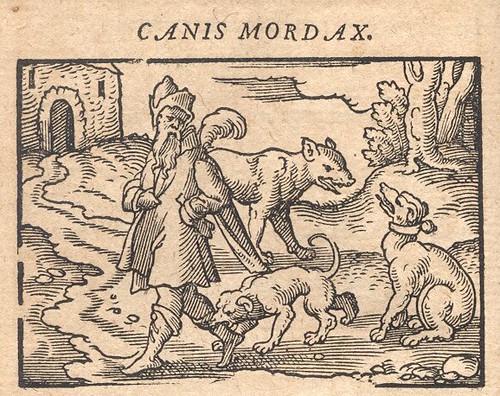
For an image today, here is the story of the vicious dog (source): 387. Canis Mordax. Cani, saepius homines mordenti, illigavit dominus nolam, scilicet ut sibi quisque caveret. Canis, ratus virtuti suae tributum hoc decus esse, populares omnes despicit. Accedit tandem ad hunc canem aliquis, iam aetate et auctoritate gravis, monens eum ne erret. “Nam ista nola,” inquit, “data est tibi in dedecus, non in decus.”

Canis Mordax  - Osius

Thursday, September 9, 2010

Myths & Legends: September 9-15

Sept. 2-8 - Sept. 9-15 - Sept. 16-22

For more information and links to the actual javascript code, see the Myths & Legends Reference Page.

Thetis Consoling Achilles. To find out more about Thetis, see this Wikipedia article: link; for information about the image: image source. There's also a post here.


Helen and Menelaus. To find out more about Helen and her husband Menelaus, see this Wikipedia article: link; for information about the image: image source.


Cleopatra. To find out more about Cleopatra, see this Wikipedia article: link; for information about the image: image source. There's also a post here.


Pandora. To find out more about Pandora and her famous box, see this Wikipedia article: link; for information about the image: image source.


Orpheus and the Animals. To find out more about Orpheus, the legendary poet and musician, see this Wikipedia article: link; for information about the image: image source. There's also a post here.


Cephalus and Procris. To find out more about Procris and her husband Cephalus, see this Wikipedia article: link; for information about the image: image source.


Orpheus and Eurydice. To find out more about Orpheus and Eurydice, see this Wikipedia article: link; for information about the image: image source. There's also a post here.