Here is a round-up of today's blog posts - and for previous posts, check out the Bestiaria Latina Blog archives. You can keep up with the latest posts by using the RSS feed, or you might prefer to subscribe by email. I'm Twittering again now at Aesopus and AesopusEnglish.
HODIE: ante diem quintum Idus Octobres (and yes, you can have your own Roman Google Calendar).
VERBUM HODIERNUM: Today's word is TENEO - read a brief essay about the word at the Verbosum blog. Here's one of the sayings you can find in the essay: Rem tene, verba sequentur, "Grasp the thing; the words will follow" (great advice if you are suffering from writers' block!).
MILLE FABULAE: New materials at the blog include lots more illustrated fables and a wonderful illustration for the story of the contrary wife, drowned (look closely and you can see her feet in the water). This is also where you can download your free PDF copy of the Mille Fabulae et Una book.
FABULAE FACILES: The new easy-to-read fable is Mercurius et Lignator, a fairy-tale like fable about the god Mercury and two woodsmen - one honest, and one dishonest.
ENGLISH AESOP: Today's English fables are from Sir Roger L'Estrange, Wright's translation of La Fontaine and the limericks for Crane's illustrated Aesop.
TODAY'S MOTTOES & PROVERBS: Widgets available at SchoolhouseWidgets.com.
Tiny Proverbs: Today's tiny proverb is: Teipsum inspice (English: Examine yourself).
3-Word Mottoes Verb-less: Today's 3-word verb-less motto is Recte faciendo securus (English: By acting rightly, no worries).
Latin Animal Proverb: Today's animal proverb is Equi donati dentes non inspiciuntur (English: You shouldn't look at the teeth of the horse that's a gift - in other words, "Don't look a gift horse in the mouth").
Proverbs of Polydorus: Today's proverb from Polydorus is: Iustitia in sese virtutes continet omnes (English: Justice contains in itself all the virtues).
Proper Name Proverb from Erasmus: Today's proper name proverb from Erasmus is Manum admoventi Fortuna est imploranda (English: It is the person who has set his hand to the work who can call upon Fortune - in other words, "God helps them that help themselves" - from Adagia 2.2.81).
Greek Proverb of the Day: Today's proverb is Νῷ πείθου (English: Obey your mind).
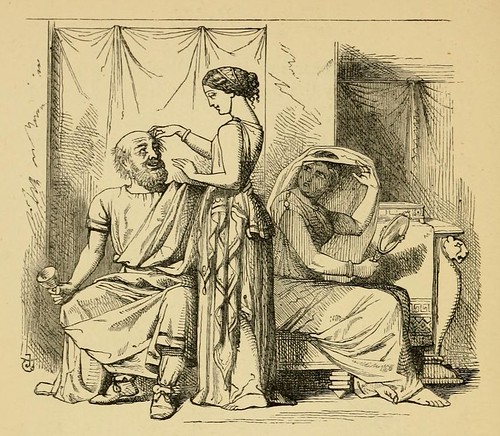
For an image today, here is a delightful illustration of the story of the man and his two ladies: 952. Concubinae Duae. Senex, cuius caput respersum iam erat canis, habebat concubinas duas, moribus et aetate dissimiles, nam altera iuvencula et lascivior, altera aetate provecta et severior erat. Ut igitur ad harum alteram forte accesserat, ita crines non similes suis dormienti vellebantur. Carpebat enim iuvencula albos, senior vero nigros. Tandem ille calvo capite omnibus risui fuit. (source)
Monday, October 11, 2010
Saturday, October 9, 2010
Myths and Legends: Heracles and the Cattle of Geryon
Heracles and the Cattle of Geryon. To find out more about the labors of Heracles, see this Wikipedia article: link; for information about the image: image source.
Geryon was a monster, sometimes described as a three-headed monster, and one of the labors of Heracles was to steal Geryon's cattle. Although Geryone was a fierce opponent, Heracles was able to subdue the giant with an arrow that had been dipped in the poisonous blood of the Hydra of Lerna (defeating the Hydra had been one of Heracles' earlier labors). Geryon gained a new fame, or infamy, by being included by Dante as one of the monsters in The Inferno.
You can also find more myths and legends for the week of October 7 - 13 here. For more information and links to the actual javascript code, see the Myths & Legends Widget Reference Page.
Geryon was a monster, sometimes described as a three-headed monster, and one of the labors of Heracles was to steal Geryon's cattle. Although Geryone was a fierce opponent, Heracles was able to subdue the giant with an arrow that had been dipped in the poisonous blood of the Hydra of Lerna (defeating the Hydra had been one of Heracles' earlier labors). Geryon gained a new fame, or infamy, by being included by Dante as one of the monsters in The Inferno.
You can also find more myths and legends for the week of October 7 - 13 here. For more information and links to the actual javascript code, see the Myths & Legends Widget Reference Page.

Friday, October 8, 2010
Round-Up: October 8
Here is a round-up of today's blog posts - and for previous posts, check out the Bestiaria Latina Blog archives. You can keep up with the latest posts by using the RSS feed, or you might prefer to subscribe by email. I'm Twittering again now at Aesopus and AesopusEnglish.
THE ONION: Did everybody see the hilarious article in The Onion??? Historians Admit To Inventing Ancient Greeks: "Honestly, we never meant for things to go this far," said Professor Gene Haddlebury, who has offered to resign his position as chair of Hellenic Studies at Georgetown University. "We were young and trying to advance our careers, so we just started making things up: Homer, Aristotle, Socrates, Hippocrates, the lever and fulcrum, rhetoric, ethics, all the different kinds of columns—everything." (read more)
HODIE: ante diem octavum Idus Octobres (and yes, you can have your own Roman Google Calendar).
VERBUM HODIERNUM: Today's word is NISI - read a brief essay about the word at the Verbosum blog. Here's one of the sayings you can find in the essay: Memoria minuitur, nisi eam exerceas, "Memory fails, unless you exercise it" (so, keep practicing your Latin, everybody!).
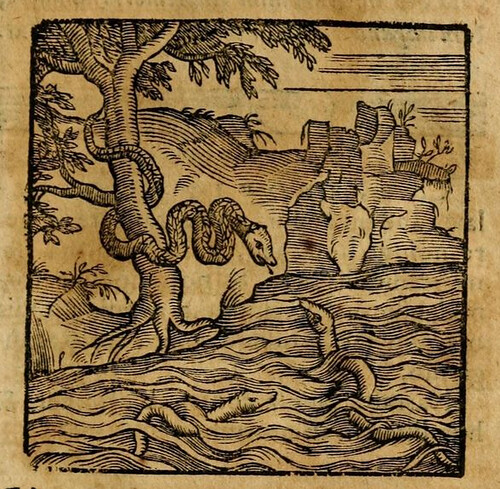
MILLE FABULAE: New materials at the blog include lots more illustrated fables, including this great illustration for the snake and the eel. This is also where you can download your free PDF copy of the Mille Fabulae et Una book.
FABULAE FACILES: The new easy-to-read fable is Arbor Secundum Viam, the sad story of the nut-tree by the side of the road (I bet some teachers can relate to the feelings of that poor tree!).
PODCASTS: Today's Latin audio fable is Gallina et Ova Serpentis , a barnyard version of "giving aid and comfort to the enemy."
ENGLISH AESOP: Today's English fables are from Sir Roger L'Estrange, Wright's translation of La Fontaine and the limericks for Walter Crane's Aesop illustrations.
TODAY'S MOTTOES & PROVERBS: Widgets available at SchoolhouseWidgets.com.
Tiny Mottoes: Today's tiny motto is: Defendendo vinco (English: By defending, I am victorious).
3-Word Proverbs Verb-less: Today's 3-word verb-less proverb is Rana gyrina sapientior (English: The frog is wiser than the tadpole)
Audio Latin Proverb: Today's audio Latin proverb is Stulti est compedes, licet aureas, amare (English: It is for a fool to love fetters, even though they be golden). To read a brief essay about this proverb and to listen to the audio, visit the Latin Via Proverbs blog.
Maxims of Publilius Syrus: Today's proverb from Publilius Syrus is: Necessitas quod poscit, nisi des, eripit (English: Unless you give Necessity what she demands, she will take it by force).
Animal Proverb from Erasmus: Today's animal proverb from Erasmus is Toto devorato bove, in cauda defecit (English: Having eaten the whole ox, he gave up at the tail; from Adagia 3.3.68 - and you can hardly blame him for that, ha ha).
The image today is the wonderful 16th-century illustration for the snake and the eel, 624. Anguilla et Serpens. Anguilla interrogabat serpentem quare, cum similes essent atque cognati, homines tamen se, potius quam illum, insequerentur. Cui serpens “Quia rarus,” inquit, “me laedit impune.” (source):
THE ONION: Did everybody see the hilarious article in The Onion??? Historians Admit To Inventing Ancient Greeks: "Honestly, we never meant for things to go this far," said Professor Gene Haddlebury, who has offered to resign his position as chair of Hellenic Studies at Georgetown University. "We were young and trying to advance our careers, so we just started making things up: Homer, Aristotle, Socrates, Hippocrates, the lever and fulcrum, rhetoric, ethics, all the different kinds of columns—everything." (read more)
HODIE: ante diem octavum Idus Octobres (and yes, you can have your own Roman Google Calendar).
VERBUM HODIERNUM: Today's word is NISI - read a brief essay about the word at the Verbosum blog. Here's one of the sayings you can find in the essay: Memoria minuitur, nisi eam exerceas, "Memory fails, unless you exercise it" (so, keep practicing your Latin, everybody!).
MILLE FABULAE: New materials at the blog include lots more illustrated fables, including this great illustration for the snake and the eel. This is also where you can download your free PDF copy of the Mille Fabulae et Una book.
FABULAE FACILES: The new easy-to-read fable is Arbor Secundum Viam, the sad story of the nut-tree by the side of the road (I bet some teachers can relate to the feelings of that poor tree!).
PODCASTS: Today's Latin audio fable is Gallina et Ova Serpentis , a barnyard version of "giving aid and comfort to the enemy."
ENGLISH AESOP: Today's English fables are from Sir Roger L'Estrange, Wright's translation of La Fontaine and the limericks for Walter Crane's Aesop illustrations.
TODAY'S MOTTOES & PROVERBS: Widgets available at SchoolhouseWidgets.com.
Tiny Mottoes: Today's tiny motto is: Defendendo vinco (English: By defending, I am victorious).
3-Word Proverbs Verb-less: Today's 3-word verb-less proverb is Rana gyrina sapientior (English: The frog is wiser than the tadpole)
Audio Latin Proverb: Today's audio Latin proverb is Stulti est compedes, licet aureas, amare (English: It is for a fool to love fetters, even though they be golden). To read a brief essay about this proverb and to listen to the audio, visit the Latin Via Proverbs blog.
Maxims of Publilius Syrus: Today's proverb from Publilius Syrus is: Necessitas quod poscit, nisi des, eripit (English: Unless you give Necessity what she demands, she will take it by force).
Animal Proverb from Erasmus: Today's animal proverb from Erasmus is Toto devorato bove, in cauda defecit (English: Having eaten the whole ox, he gave up at the tail; from Adagia 3.3.68 - and you can hardly blame him for that, ha ha).
The image today is the wonderful 16th-century illustration for the snake and the eel, 624. Anguilla et Serpens. Anguilla interrogabat serpentem quare, cum similes essent atque cognati, homines tamen se, potius quam illum, insequerentur. Cui serpens “Quia rarus,” inquit, “me laedit impune.” (source):
Thursday, October 7, 2010
Myths & Legends: October 7-13
Sept. 30 - Oct. 6 - Oct. 7-13 - Oct. 14-20
For more information and links to the actual javascript code, see the Myths & Legends Reference Page.
Aeneas Meets Dido. To find out more about Aeneas and Queen Dido, see this Wikipedia article: link; for information about the image: image source. There's also a post here.

The Abduction of Ganymede. To find out more about the gods' cup-bearer Ganymede, see this Wikipedia article: link; for information about the image: image source.

Heracles and the Cattle of Geryon. To find out more about the labors of Heracles, see this Wikipedia article: link; for information about the image: image source. There's also a post here.

Alcestis Takes the Place of Admetus. To find out more about Alcestis, see this Wikipedia article: link; for information about the image: image source.

The Flight of Aeneas. To find out more about Aeneas and his flight from Troy, see this Wikipedia article: link; for information about the image: image source. There's also a post here.

Charon. To find out more about Charon, the boatman of the underworld, see this Wikipedia article: link; for information about the image: image source. There's also a post here.

Penelope. To find out more about Penelope, the wife of Odysseus, see this Wikipedia article: link; for information about the image: image source.

Myths and Legends: Aeneas Meets Dido
Aeneas Meets Dido. To find out more about Aeneas and Queen Dido, see this Wikipedia article: link; for information about the image: image source.
You can see Aeneas with his old father Anchises here - but that is not his son Ascanius with him. Instead, Aeneas's mother, the goddess Venus, has substituted her son Cupid in place of Ascanius to make sure Dido will fall in love with the handsome Aeneas - the wings are a dead giveaway to the people looking at the painting! Here's a close-up:
You can also find more myths and legends for the week of October 7 - 13 here. For more information and links to the actual javascript code, see the Myths & Legends Widget Reference Page.
You can see Aeneas with his old father Anchises here - but that is not his son Ascanius with him. Instead, Aeneas's mother, the goddess Venus, has substituted her son Cupid in place of Ascanius to make sure Dido will fall in love with the handsome Aeneas - the wings are a dead giveaway to the people looking at the painting! Here's a close-up:
You can also find more myths and legends for the week of October 7 - 13 here. For more information and links to the actual javascript code, see the Myths & Legends Widget Reference Page.

Wednesday, October 6, 2010
Round-Up: October 6
Here is a round-up of today's blog posts - and for previous posts, check out the Bestiaria Latina Blog archives. You can keep up with the latest posts by using the RSS feed, or you might prefer to subscribe by email. I'm Twittering again now at Aesopus and AesopusEnglish.
HODIE: pridie Nonas Octobres (and yes, you can have your own Roman Google Calendar).
VERBUM HODIERNUM: Today's word is HOSTIS - read a brief essay about the word at the Verbosum blog. Here's one of the sayings you can find in the essay: Iram qui vincit, hostem superat maximum, "He who conquers anger overcomes his greatest enemy" (a very good saying for anyone prone to getting angry!).
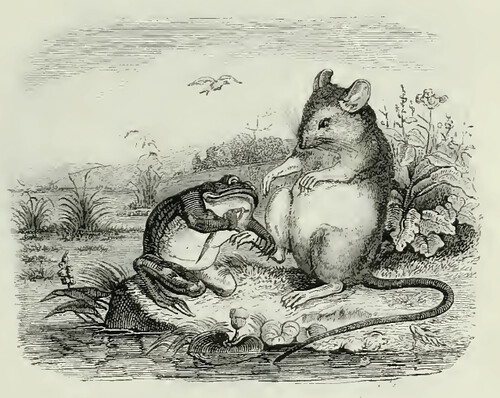
MILLE FABULAE: New materials at the blog include more illustrated fables, such as Grandville's marvelous illustration for Rana et Mus, Amici (see below). This is also where you can download your free PDF copy of the Mille Fabulae et Una book. There have been over 2500 downloads of the book so far! Wow!
FABULAE FACILES: The new easy-to-read fable is Lupus et Pastorum Convivium, the story of the wolf's take on the shepherds feasting.
ENGLISH AESOP: Today's English fables are from Sir Roger L'Estrange, Wright's verse translation of La Fontaine and the limericks that accompany Walter Crane's illustrated Aesop.
TODAY'S MOTTOES & PROVERBS: Widgets available at SchoolhouseWidgets.com.
3-Word Mottoes: Today's 3-word motto is Semper spero meliora (English: I always hope for better things - although the Latin version sounds so much nicer!).
3-Word Proverbs: Today's 3-word proverb is Sola pecunia regnat (English: Money alone rules - a pretty fair assessment of Washington DC I would say!).
Rhyming Proverbs: Today's proverb with rhyme is: Cum contentus eris, dives tunc efficieris (English: When you will be content, then you will be rich - in other words: true wealth is a state of mind!).
Vulgate Verse: Today's verse is Non est homo qui non peccet. (II Chron. 6:36). For a translation, check out the polyglot Bible, in English, Hebrew, Latin and Greek, at the Sacred Texts Archive online.
Elizabethan Proverb Commentary: Here is today's proverb commentary, this time by Taverner: Nota res mala optima: An evill thinge knowen is best. It is good keping of a shrew that a man knoweth. For whan one is ones accustomed to a shrew or any other incommoditie, what so ever it be, it is no griefe. .
Today's Poem: Today's poem is from the wonderful epigrams of Owen (3.110), with a word list at NoDictionaries.com:
Today's image is Grandville's wonderful mouse and frog that I mentioned above; the fable is on the long side, but worth it! 602. Rana et Mus, Amici. Muri, in ostio molendini residenti, supervenit rana et rogavit ut ipsam hospitio suo colligeret. Cui mus respondit benigne et apposuit ei farinam. Sed cum potus diu exspectatus non venit, rana, potibus assueta, tristis resedit. Muri dixit quod si secum vellet ad sua transire, ipsa sibi vicem reddere vellet. Sic venerunt ad fluvium et rana muri ait, “Hic transeunda est nobis aqua. Si fessus es, ego iuvabo te ne in aqua deficias; filum nobis alligabimus, tu in collo, et ego in pede meo.” Tunc rana, sponte se mergens, muri machinata est naufragium. Sed aquila forte aderat et murem unguibus arripit, similiter trahens ranam annexam, quae sic fertur locuta fuisse, “Qui socio suo parat opprobrium, non immerito cadit in laqueum.” (source)
HODIE: pridie Nonas Octobres (and yes, you can have your own Roman Google Calendar).
VERBUM HODIERNUM: Today's word is HOSTIS - read a brief essay about the word at the Verbosum blog. Here's one of the sayings you can find in the essay: Iram qui vincit, hostem superat maximum, "He who conquers anger overcomes his greatest enemy" (a very good saying for anyone prone to getting angry!).
MILLE FABULAE: New materials at the blog include more illustrated fables, such as Grandville's marvelous illustration for Rana et Mus, Amici (see below). This is also where you can download your free PDF copy of the Mille Fabulae et Una book. There have been over 2500 downloads of the book so far! Wow!
FABULAE FACILES: The new easy-to-read fable is Lupus et Pastorum Convivium, the story of the wolf's take on the shepherds feasting.
ENGLISH AESOP: Today's English fables are from Sir Roger L'Estrange, Wright's verse translation of La Fontaine and the limericks that accompany Walter Crane's illustrated Aesop.
TODAY'S MOTTOES & PROVERBS: Widgets available at SchoolhouseWidgets.com.
3-Word Mottoes: Today's 3-word motto is Semper spero meliora (English: I always hope for better things - although the Latin version sounds so much nicer!).
3-Word Proverbs: Today's 3-word proverb is Sola pecunia regnat (English: Money alone rules - a pretty fair assessment of Washington DC I would say!).
Rhyming Proverbs: Today's proverb with rhyme is: Cum contentus eris, dives tunc efficieris (English: When you will be content, then you will be rich - in other words: true wealth is a state of mind!).
Vulgate Verse: Today's verse is Non est homo qui non peccet. (II Chron. 6:36). For a translation, check out the polyglot Bible, in English, Hebrew, Latin and Greek, at the Sacred Texts Archive online.
Elizabethan Proverb Commentary: Here is today's proverb commentary, this time by Taverner: Nota res mala optima: An evill thinge knowen is best. It is good keping of a shrew that a man knoweth. For whan one is ones accustomed to a shrew or any other incommoditie, what so ever it be, it is no griefe. .
Today's Poem: Today's poem is from the wonderful epigrams of Owen (3.110), with a word list at NoDictionaries.com:
Sermones crebri morum sunt signa malorum.English: "Talking too much is a sign of bad character, for what need is there of words when you can see the deeds?" So true: deeds speak louder than words!
Nam quid opus verbis est, ubi facta vides?
Today's image is Grandville's wonderful mouse and frog that I mentioned above; the fable is on the long side, but worth it! 602. Rana et Mus, Amici. Muri, in ostio molendini residenti, supervenit rana et rogavit ut ipsam hospitio suo colligeret. Cui mus respondit benigne et apposuit ei farinam. Sed cum potus diu exspectatus non venit, rana, potibus assueta, tristis resedit. Muri dixit quod si secum vellet ad sua transire, ipsa sibi vicem reddere vellet. Sic venerunt ad fluvium et rana muri ait, “Hic transeunda est nobis aqua. Si fessus es, ego iuvabo te ne in aqua deficias; filum nobis alligabimus, tu in collo, et ego in pede meo.” Tunc rana, sponte se mergens, muri machinata est naufragium. Sed aquila forte aderat et murem unguibus arripit, similiter trahens ranam annexam, quae sic fertur locuta fuisse, “Qui socio suo parat opprobrium, non immerito cadit in laqueum.” (source)
Subscribe to:
Posts (Atom)